

Apple, as of now, has reported a revenue of $416 billion and double-digit EPS (Earnings Per Share) growth for the fiscal year 2025 (as per official press release). The September quarter record was $102.5 billion. But do you know, once the company founders sold a van and a calculator to start the firm in a small garage.
How did three young lads with no heavy investments, moreover, one being a college dropout, make it this big? In this blog, I will not only take you through the Apple Marketing Strategy, which is the backbone of its fortune. But you will be reading an inspiring and brainy journey. You will also find out some interesting facts about the company and its founders.
Journey of Apple
Apple was founded on 1 April 1976 by Steve Jobs, Ronald Wayne, and Steve Wozniak, aged 21, 41, and 25, respectively. Each of them had their unique skill set and started the company in the garage of Jobs’ family home in Los Altos, California. Wozniak used his engineering mastery and build Apple’s first product, Apple I (just a motherboard with no extra hardware).
We all know Steve Jobs was visionary and always loved innovation; he oversaw the financing, marketing, and was forward-looking for the company. While Ronald, the most mature and graduated among them, designed the first company logo and original partnership contract.
Apple’s vision is to empower people, bind them together, and offer the best possible technology for innovative living. Reading further, we will discuss more milestones and major shifts, and internal conflicts within the company, alongside Apple’s marketing plan
What is Apple’s Marketing Strategy?
Marketing strategy of Apple is its approach towards its buyers, potential customers, and market to not just sell them a product or device but a comprehensive lifestyle and experience. It is a robust, full-fledged marketing road plan that involves brand building and positioning, developing ecosystems, and changing the way the world deals with technology.
Unlike explaining the plan in the typical marketing P’s framework, I have simplified things for you. Let’s dive into it step by step.
Brand Philosophy & Positioning
Apple believes in leading and not in reacting; it sets the standards rather than competing with them. Apple’s marketing strategy is also a winner for the CMO Survey Award for Marketing Excellence for 10 consecutive years.
Simplicity
For Apple, it’s always less is more; they believe in a simple, minimalistic, and straightforward approach in presenting their brand and ideas. One of the very famous quotes by Steve Jobs says it “Simple can be harder than complex: You have to work hard to get your thinking clean to make it simple.”
The product designs are simple, sleek, offering neutral colors with simple names and the trademarked Apple logo. They believe in speed and smooth functionality over complex technicality. Therefore, the products are designed to be user-friendly.
The promotions do not overwhelm viewers with too much information or an ultra-detailed technical view of the product. Instead, it reaches the audience in a unique, attractive, and simple way.
Emotions
There is a simple saying in sales: you don’t sell things, you sell emotions. People don’t buy what you sell them; they buy what they want to. And just like that, Apple doesn’t sell products but a lifestyle.
They work on a storytelling approach in ads and promotions, using Apple products. For instance, the latest Apple Holiday ad shot on iPhone 17 Pro, where they gave a message of Friendship as a Gift.
Pricing
As per Apple’s ‘premium is priceless’, they have a controlled pricing strategy and rarely go on sale. They use the premium pricing model to symbolize Apple as a luxury, innovative, quality, and exclusive product brand.
They believe in building a loyal user base rather than attracting new ones with low prices. Though not to miss out on the upper-middle-class and middle-class audience, features like Apple Card (titanium card) for cashbacks and EMI options are available.
Experience Over Competition
Another famous quote by the founder is that, “Your time is limited, do not waste it by living someone else’s life.” Apple builds new narratives fighting with its rivals; instead, the rivals compete with Apple. It uses years of gained experience and expertise to come up with something new, in one word: What’s Next?
Related: What Is Video Marketing Strategy? Is Video Marketing Effective?
Building the Apple Ecosystem
Apple’s simplicity is always accompanied by innovations. It consistently focuses on making new products, services, and features to cover every possible aspect and offer a holistic Apple experience to its customers. This complete network of products and services is called the Apple ecosystem.
Things like limited cross-platform sharing (iOS data could be shared without iCloud links or third parties to Androids), a lightning port for charging, kept the ecosystem tighter. Though now there is interoperability and USB-C changes, Apple still keeps its superior experience intertwined. Another classic example is that you can’t use an Apple Watch without an iPhone.
It offers a controlled product line but a stronger identity. Apple Watch, Apple Pay, iPhones, AirDrop feature, AppleTV, AirTags, HomePod, Apple Music or iTunes, Apple Wallets. With all these listed products and services, you can do almost everything in your daily life, from monitoring health, making payments, streaming, listening to music, operating home electronics, tracking luggage, to storing ID cards and much more. And they all can be seamlessly integrated.
All these smart and yet simple strategies make Apple stand out from the rest.
Promotion Tactics of the Brand
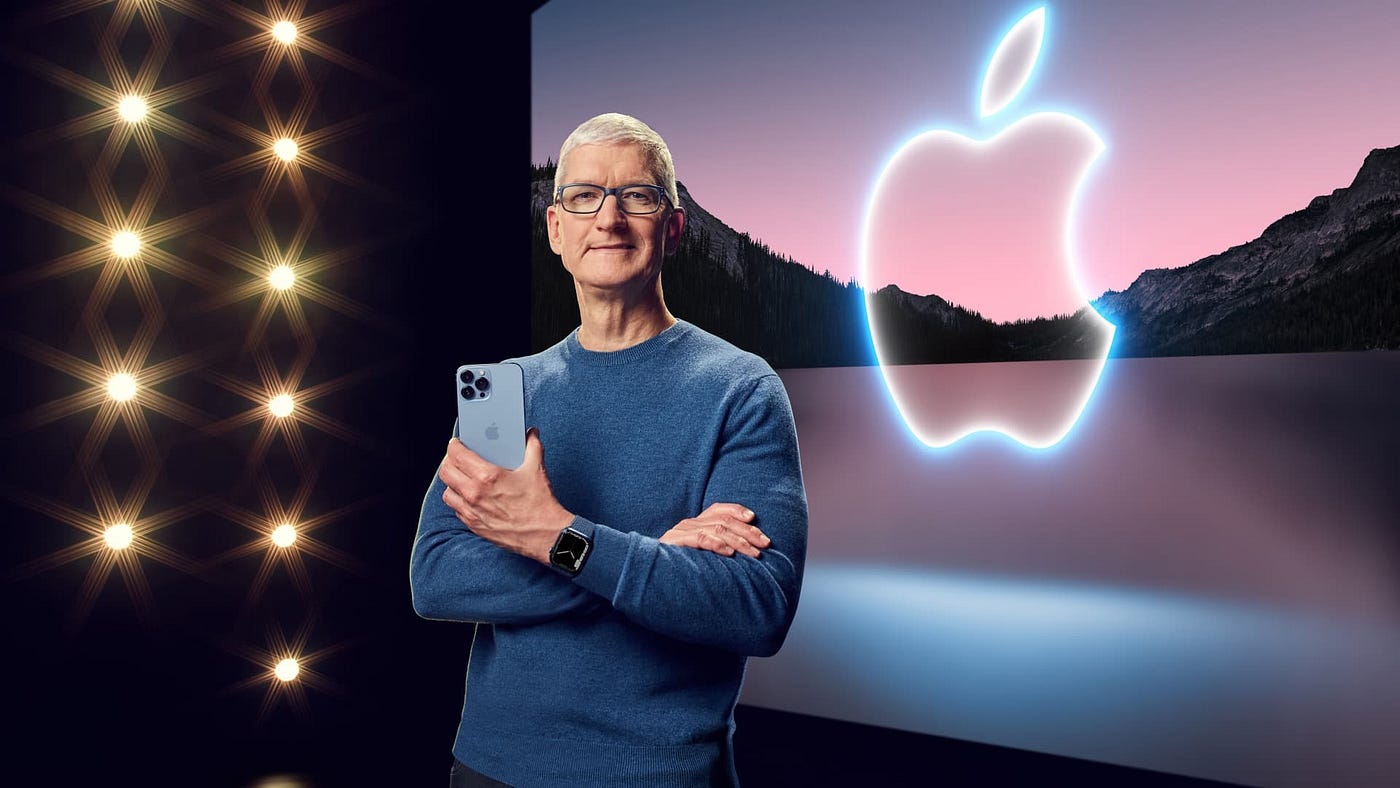
Secrecy, hype, and world-class launch events are Apple’s trademark when it comes to introducing new products. They create a controlled hype and leaks about pricing and features. A study by BankMyCell suggests that the highest customer interest spiked up to 230% for Apple phones after its announcement. The reasons are also said to be press frenzy and self hype by consumers in their social circles.
Customer Support & Retail Experience
Do you know 93% of Apple buyers say they will continue to purchase Apple phones in the future? But why? Because one of the key reasons for a buying decision is the buyer’s journey, ie, how their experience was while purchasing something. And Apple amazingly focuses on it with its:
Neutral colors & minimalism in retail stores
Welcoming staff
Sleek, appealing, and classy products
Easy website navigation
High-quality customer service via text/ chat support
Net Promotor Score (NPS), something Apple uses to calculate how willing customers are to recommend the company’s products to others
Focus on changing what lacks and filling the gaps by analyzing NPS
The peace of mind with easy priority and fast support from AppleCare
Advocacy Marketing Strategy of Apple
People trust people when it comes to buying something, and Apple customers promote its products for free. There is a strong sense of community feeling among Apple users, the tech-savvy, premium, and elite class.
Apple very well uses user-generated content (UGC) for its marketing and promotions. Either in the form of #ShotoniPhone #iPadArt #AppleFitness+ ads or simply as social proof.
Multichannel Approach
For significant and measurable growth of a business, one needs to have a strong and balanced mix of marketing. You need to attract and engage customers from various channels to cover a large audience demographic.
Apple does it well, with its print & TV ads, website ads, and Apple digital marketing strategy. You can get your Apple gadgets from both offline and online stores. You can access the Apple retail stores directly from websites, authorized online sellers such as Amazon or eBay, telecom companies like Jio, AT&T, Verizon, Airtel, and others.
Amazing Apple Facts
Apple was on the verge of bankruptcy when Steve Jobs returned, after he had left due to internal conflicts.
The first Apple product, Apple I, was built in a wooden case and sold for $500.
The ultra compact iPods were inspired by the compact Toshiba hard drive, which nobody used much.
They were originally building a tablet, and Steve said, to shrink it down and make an iPhone.
iMac meant ‘Internet Mac’; the primary goal of the product was to have out-of-the-box internet connectivity.
The company was incorporated as Apple Computer Inc. in 1977.
Ronald Wayne sold back his share, held a 10% stake, but later exited. It is seen as one of the biggest mistakes in financial history, because today the same shares are worth billions of dollars.
Related: Major Advantages & Disadvantages Of Digital Marketing
Apple Marketing Examples
Here are some of the most attractive and famous ad campaigns by Apple.
911 (2022)
The ad campaign by Apple in early January 2022, after the Apple Watch Series 7 arrived in the market. There were no people or heavy visuals in the ad, but 3 call recordings were being played, where individuals named Jason, Jim, and Amanda were stuck in an emergency. And they dialed 911 with their Apple Watches and got rescued.
Silhouettes (2003)
The campaign was designed to promote iPods and iTunes in 2003. It showed black silhouettes dancing with white iPods and white earphones plugged in, in front of solid, different colored backgrounds. These ads ran for more than 2 years and appealed to different types of music listeners and youngsters. No heavy texts or talking, just pure joy, movement, and freedom were displayed.
1984 (1984)
It was the very first commercial ad by Apple, and was first to air during Super Bowl XVIII on the 22nd of January, 1984. And it introduced the Apple Macintosh computer. It positioned Apple as a rebel force of innovation, and it said Apple will introduce Macintosh. And you’ll see why 1984 won’t be like “1984”.
Final Word
From garage computers to global culture, Apple has covered a long path of innovation, creation, and legacy in tech over the decades. It was not only about fancy gadgets but revolutionizing the ways we interact with technology today.
From its humble beginnings, the company rapidly grew and listed its IPO on December 12, 1980, and officially went public on the NASDAQ. All of this is done with a mastered Apple marketing strategy. From making a superior chain of products to giving an experience of a lifetime to its consumers, Apple does it all. Their presentation of simplicity with smartness is a key growth factor. You can learn to build a brand on emotions, experience, and vision from Apple.
Related: Samsung Marketing Strategy: The Tech Giant’s Journey to Building a Global Brand
The post Apple Marketing Strategy: From Garage Dreams To Global Dominance appeared first on The Next Hint.