

This is the year it became clear that the world is now living in climate overshoot—where global temperatures exceed agreed limits, entering a range increasingly dangerous for both the planet and humanity.
New global analyses show that average warming over the past three years has already exceeded 1.5°C, the threshold nations agreed in Paris we should avoid “if at all possible.” But global averages hide the reality people are already experiencing. Parts of the Arctic, Central and Eastern Europe, and North America are now 3–7°C hotter than pre-industrial levels. Whether this overshoot is brief or prolonged will shape the stability of societies for decades.
[time-brightcove not-tgx=”true”]
I served as the U.K.’s Climate Envoy in the run-up to the 2015 U.N. climate conference in Paris. By the time negotiators arrived, I was confident an agreement could be reached. Not because success was guaranteed, but because more than a decade of painstaking diplomacy had already done the hard work. Climate attachés across embassies, negotiating teams in capitals, and years of quiet relationship-building laid the foundations. The Paris Agreement showed what multilateralism can deliver when science guides policy and shared survival outweighs short-term politics.
A decade on, that environment has changed. Politics in many countries has become more polarized and combustible. Trust between governments has thinned, not just on climate but across global cooperation more broadly. The United States stepping back from consistent climate leadership has been a defining factor. The idea that a single summit can deliver universal consensus now looks improbable. That does not mean cooperation has failed, but it does mean progress is increasingly driven by coalitions of countries, states, cities, and businesses willing to move faster.
It is worth remembering that some of the most important advances in the energy transition happened before Paris. Between 2000 and 2015, long before a global agreement, governments drove renewable energy into markets through policy mandates. European countries led the way, later joined by California and China. At the time, renewables were not cost-competitive with fossil fuels. But as markets scaled, prices collapsed. Today, in much of the world, renewable energy outcompetes fossil fuels on cost alone. Policy created markets; markets transformed technology.
That logic still holds. At COP30 in Brazil this year, more than 80 countries aligned behind a call to end fossil fuel expansion. These alliances may lack the symbolism of Paris, but over time they change investment flows, reshape expectations, and rewire industries. There is, however, a clear leadership vacuum. Bold, credible climate leadership could still change the game.
China’s role in this new landscape has been quieter but no less consequential. Its deployment of clean energy is happening at unprecedented scale. Manufacturing capacity, grid expansion, electric vehicles, and battery storage now matter as much as diplomatic language. China’s direction of travel will heavily influence outcomes over the coming decades, and it offers genuine grounds for cautious optimism. But progress, globally, remains dangerously incomplete.
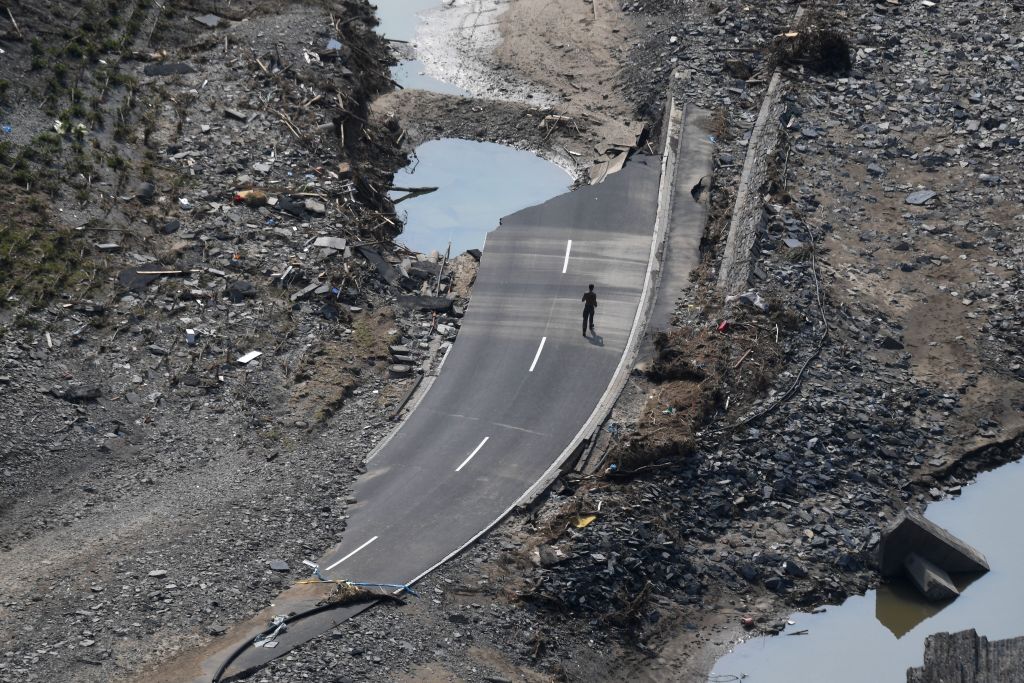
Against this backdrop, it is tempting to say the Paris Agreement was a failure. The planet has crossed 1.5°C. Wildfires, floods, and heat extremes are becoming routine. The losses and damages from extreme weather events are mounting to the point that major reinsurers now warn that entire economic models may become unviable if climate risks continue to rise unchecked. The countries calling for an end to fossil fuel expansion now need to translate ambition into faster, deeper action over the next decade. It can be done.
Perhaps the greatest failure of the past 10 years has been finance. Wealthy nations promised support to countries facing climate impacts while still building their economies. That promise was under-delivered. The result has been constrained ambition across much of the Global South and a deep erosion of trust.
Meanwhile, fossil fuel interests have continued to exert disproportionate influence over policymaking. Delay is too often framed as caution. Prudence disguises inertia. Overshoot has changed the terms of success. It is no longer defined simply by where we end up by mid-century, but by how high temperatures rise and how long they stay there. Those two variables will determine the future of coastal cities, food systems, coral reefs, ice sheets, and social stability itself.
Responding to this reality requires an integrated approach. Climate action now has four inseparable tasks: reducing emissions; removing excess greenhouse gases already in the atmosphere; restoring damaged ecosystems; and building resilience.
Reducing emissions remains paramount. Fossil fuels are still the main driver of warming. Carbon dioxide stays in the atmosphere for centuries, meaning that even steep cuts now would largely stabilize temperatures rather than bring them down. Methane, however, is different. It is a powerful greenhouse gas with a much shorter lifetime in the atmosphere, and its rapid rise means it has contributed roughly 30% of warming to date. Carbon dioxide concentrations are now around 427 parts per million, but when methane is included, effective greenhouse gas levels exceed 500 ppm, compared with about 275 ppm before the Industrial Revolution.
Recent analysis by the Climate Crisis Advisory Group suggests that cutting methane emissions by 30% over the next decade could reduce global average temperatures by around 0.3°C. Much of this could be achieved at low cost using existing technologies. Combined with rapid CO₂ reductions, it could still make the difference between a manageable overshoot and a dangerous one.
Repairing the Earth’s systems, from forests and soils to oceans and the atmosphere, is not environmental idealism. It is planetary maintenance. And resilience must become central to public policy, shaping how we design infrastructure, housing, food systems, and health care. Climate change is no longer a future risk; it is a present condition that societies must adapt to.
The cost of inaction now far exceeds the cost of action. Every year of delay compounds damage and expense. The capital to act exists. What is missing is political coherence and sustained leadership.
The Paris Agreement was never meant to solve the climate crisis in a single moment. It was designed to change direction. Ten years on, the real test is not whether it reassures us on its anniversary, but whether it still makes us uncomfortable enough to act. History will judge what we did next.