

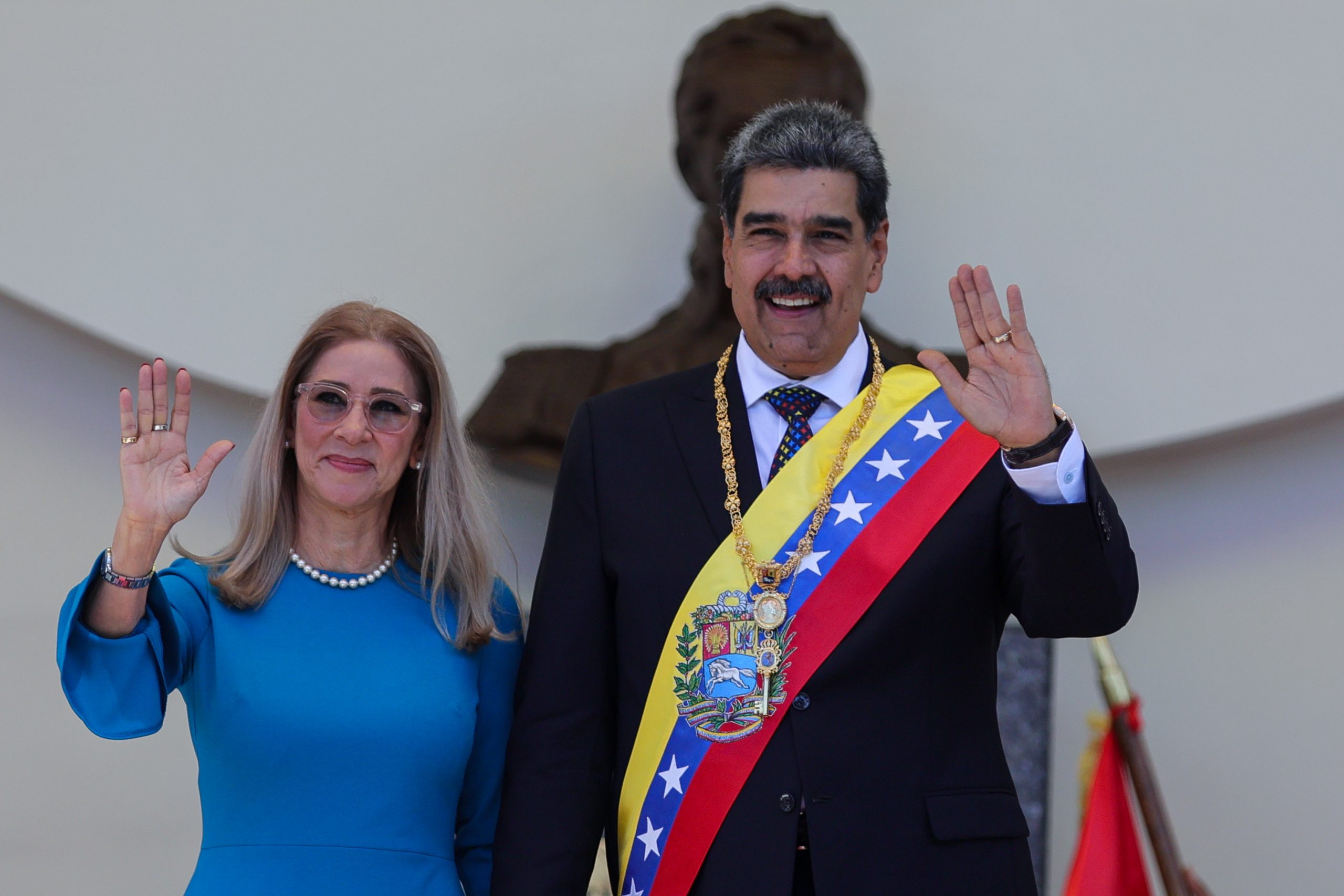
When Venezuelan President Nicolás Maduro was captured by U.S. special forces during a historic raid in his native homeland, he wasn’t alone. His wife, Cilia Flores, was also detained.
Having since been brought back to the U.S. to await trial on narco-terrorism charges, Venezuela’s prominent couple—who plead “not guilty” during their first U.S. court appearance on Monday—are set to face the “full wrath of American justice,” according to U.S. Attorney General Pam Bondi.
[time-brightcove not-tgx=”true”]
Much is known of Maduro, in particular his contentious relationship with President Donald Trump and his authoritarian leadership over Venezuela, which has now come to an end after almost 13 years. But outside the South American country, less is known about First Lady Flores, who is famously described by her husband as his “first combatant.”
With the world’s gaze now falling upon the detained couple, here’s what to know about Maduro’s influential wife.
Flores has decades of experience in Venezuelan politics
Flores’ first notable involvement in Venezuelan politics came in 1992, around the same time she met Maduro.
In February of that year, an attempted coup was staged by former Venezuelan President Hugo Chávez (who at the time was a Lieut. Col.) and a number of other military rebel leaders.
Targeting Carlos Andros Perez, the coup was ultimately unsuccessful, with Chávez sent to prison facing a decades-long sentence. Flores, an attorney at the time, represented Chávez and other coup participants, ultimately helping to secure their release from prison two years later in 1994 and overseeing their pardon from then-President Rafael Caldera.
In 1998, Chávez stormed to victory in the presidential election and Flores quickly became a recognizable figure in Venezuelan politics. She went on to become a member of the National Assembly in 2000, and was appointed leader of the National Assembly six years later, replacing Maduro who became the country’s foreign minister.
Flores held the position until 2011, and a year later became the country’s Attorney General under Chávez.
Flores hosted a TV show about family values
Flores described family as “the most important thing for society, for the revolution, for this country,” during her TV show, Con Cilia en Familia, which aired in 2015.
But behind the scenes, despite her focus on the family, Flores still held significant influence over Venezuela’s legal and political workings. She reportedly built up her influence within the country’s judicial circles and the National Electoral Council branch of the government.
After the death of Chávez in 2013, Maduro took the reins of the United Socialist Party of Venezuela in an extremely tight election against opposition Henrique Capriles. Maduro won the popular vote by 50.7% to 49.1%.
Maduro and Flores started dating in the 90s and raised children together, but they only got married a few months into Maduro’s presidency. “We want to send a very clear message about the strengthening of the Venezuelan family,” Maduro said following the private ceremony, attended by close family members.
Flores remained a figure in the political landscape, including her victory as a candidate once again in the National Assembly elections in 2016, but she emphasized a family-first approach.
In 2008, the leader of a pro-government union accused Flores of nepotism after she reportedly hired at least 40 relatives to work within the National Assembly. Flores responded to the allegations during Maduro’s 2013 presidential campaign, which she is credited with boosting.
“My family got in based on their own merits, I am proud of them and I will defend their work as many times as necessary,” she said during an interview with La Vanguardia.
Previous clashes with the U.S. authorities
Relatives of Flores have also experienced legal problems with the U.S. authorities.
In October 2015, Flores’ nephews Franqui Francisco Flores de Freitas and Efraín Antonio Campo Flores were arrested in Haiti, accused of attempting to smuggle cocaine into the U.S. According to the Drug Enforcement Agency (DEA), the pair said they intended to use proceeds from trafficking to fund Flores’ campaign for the National Assembly.
In response, Flores accused the U.S. of kidnapping her nephews.
“We have evidence that the DEA was here on Venezuelan territory violating our sovereignty and committing crimes on our territory,” claimed Flores in January 2016. “The DEA committed the crime of kidnapping, which the (legal) defense will prove.”
Flores’ nephews were each sentenced to 18 years’ imprisonment in 2017 for conspiring to import cocaine, but they were released in 2022 by the Biden Administration as part of a prisoner swap with Venezuela.