

The Belgian filmmaking duo Jean-Pierre and Luc Dardenne have been making observant, low-key films for so long now that it’s easy to take them for granted. Their trademark is simple: they take an interest in anyone society may have forgotten, in people who struggle harder than most of us to get through an average week, yet often show it less. The factory worker in Two Days, One Night (played, with flickering urgency, by Marion Cotillard) who’s laid off as the result of a deal her co-workers have made with their employer; the African immigrants of Tori and Lokita, striving to build a life in a world that doesn’t want them; the 11-year-old boy in The Kid with a Bike, abandoned by his father, who suddenly has no idea where he belongs: The Dardennes don’t specialize in complex plots. They’re interested only in quotidian survival, that basic thing we all have to manage, though for many, the barriers to pulling it off seem insurmountably high.
[time-brightcove not-tgx=”true”]
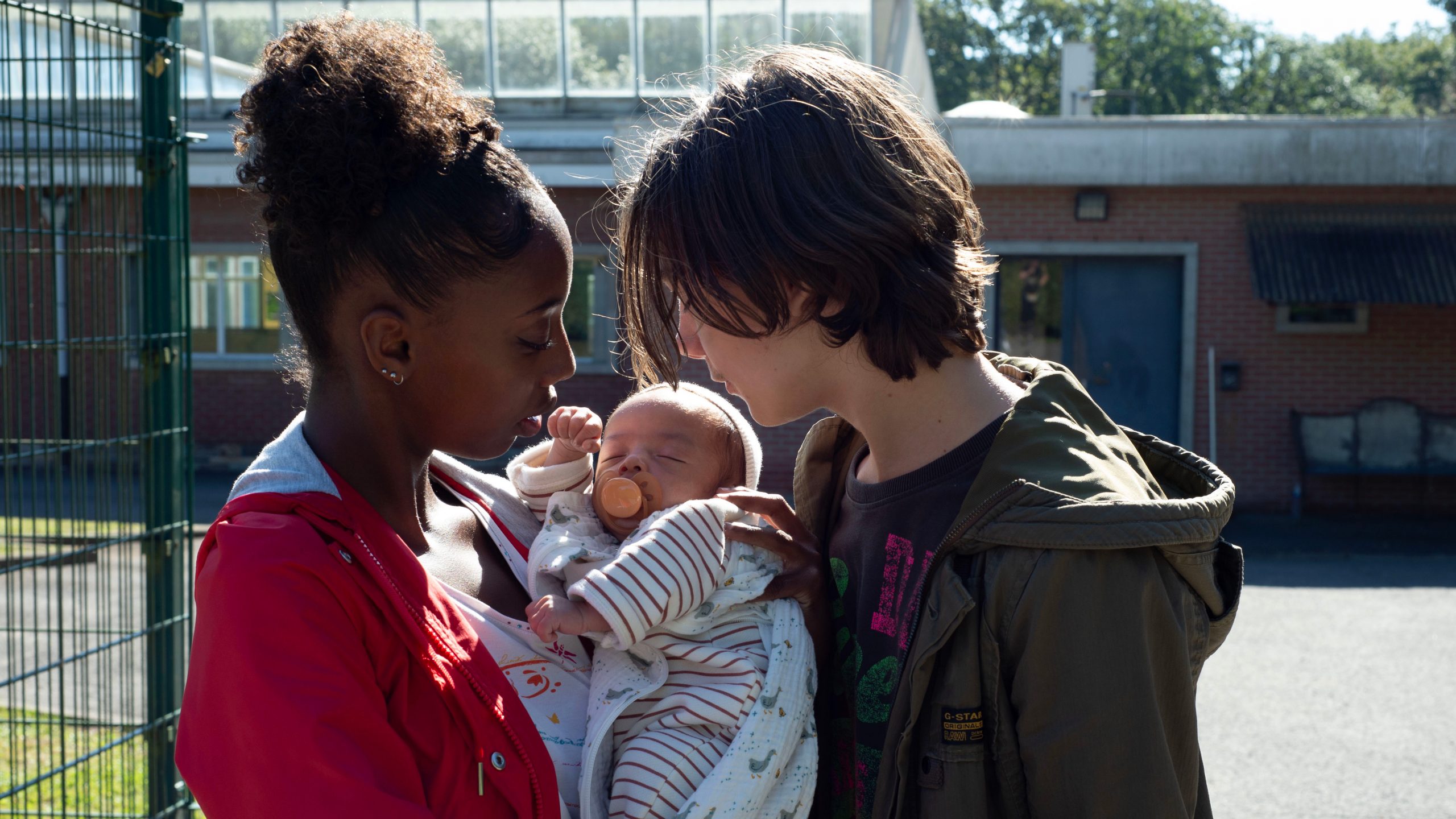
The Dardennes’ movies have a gentle uniformity, which is why they often slip through the cracks among flashier pictures vying for our attention. But Young Mothers is among the best of their films, so empathetically understated that its full power may not hit you until hours after you’ve watched it. The picture is set, like many of the Dardennes’ films, in Liege, Belgium; it follows four very young women who are either pregnant or have just given birth, all of them living in a shelter for young single mothers, where they’re taught to care for their infants before they’re recirculated, as painlessly as possible, back into the world. Ariane (Janaina Halloy Fokan), born into an impoverished family, wants to place her tiny daughter Lili with adoptive parents, though her mother, pinched, angry, and intrusive, tries to force her into keeping the child so they can raise her together. Perla (Lucie Laruelle), a winsome teenager with a ballerina topknot, desperately wants to form a family with her baby’s father, a delinquent kid who has no interest either in her or the child they produced together. Julie (Elsa Houben) is a recovering drug addict who adores her new baby, and has big plans to marry her supportive boyfriend, though she’s riddled with fits of anxiety about backsliding into addiction. And Jessica (Babette Verbeek), perhaps the most vulnerable of all, yearns to meet her birth mother, who gave her up as an infant and seemingly wants nothing to do with her; she fears she’s stuck in a cycle that will prevent her from bonding with her own child.
A fifth young woman, Naïma (Samia Hilmi), is a role model for all of them: she’s leaving the shelter to go back to school—she loves trains, and she hopes to become a ticket inspector. (We see her mother, in a headscarf, cradling her grandchild, the implication being that the two have found some accord after previous strife.) Young Mothers is one of those movies that manages to feel both spare and infinitely detailed at once. What strikes you—until you realize it shouldn’t strike you—is how modest these young women’s goals are. All of them, even Julie with her solid partner (he’s played by Jef Jacobs, who has the vibe of a sweet Belgian Ryan Gosling), will have to find some sort of work, even as they care for their babies. And they want to do that as best they can, beginning with seemingly simple yet daunting tasks like cleaning their belly buttons with alcohol and a cotton swab. Sometimes that feels like more than they can manage, given that they’re also dealing with outside forces beyond their control: their own bossy, unhelpful—or worse yet, absentee—mothers; negligent partners or guys who refuse to recognize their children at all; aggressive drug dealers with a vested interest in their former clients. You can see why, for these women, even learning to mix up a bottle of baby formula can feel like a huge responsibility they’re not ready for.
To play these characters, the Dardennes have cast young women who, though all of them have acted before in some capacity, still have a quietly moving guilelessness. These performances are forthright, unvarnished. What hits you immediately is how impossibly young these characters are. Verbeek’s Jessica, the girl in search of her lost mother, looks the youngest, her face still full and round with baby fat. Laruelle’s Perla is both tough and vulnerable; she pushes her baby in his carriage with the assurance of a ballet dancer, yet she crumples when she finally has to reckon with her boyfriend’s callousness. Young Mothers is fiction, but it has the feel of a documentary; you recognize that these women’s feelings, and their fears, are certainly playing out somewhere in your own city or town, probably in your own neighborhood. When Ariane meets her baby’s adoptive parents for the first time, she asks them tentatively if either of them plays an instrument. She’s visibly relieved to learn that the potential young father plays the saxophone. And then she begs these eager, hopeful prospective parents to make sure her daughter has music in her life.
What a strange, simple, yet wholly believable thing: Ariane of course wants her daughter to have loving parents, enough to eat, a chance to succeed in school. And still, she sees music as essential. This is what she’s thinking about as she’s about to hand her daughter to a new family forever. It’s an example of what the Dardennes, at their best, do so well: looking at the texture of everyday lives and finding the threads of gold running beneath.