

Are you also searching for software to automate your company’s policy? In this article, I’ll share details about the policy management software that helped me automate policy management for my organization.
I have shared details about what policy management software is, the 8 best policy management software, how to find the best one that will suit your organization’s needs, types of policies, and more.
What is Policy Management? Describe the Policy Management System
Software policy management involves tools to manage corporate policies, rules, and update them in a single or central location. Such systems enable the teams to access policies at any time and make sure that they are followed by everyone.
What are the 5 Steps of the Policy Process?
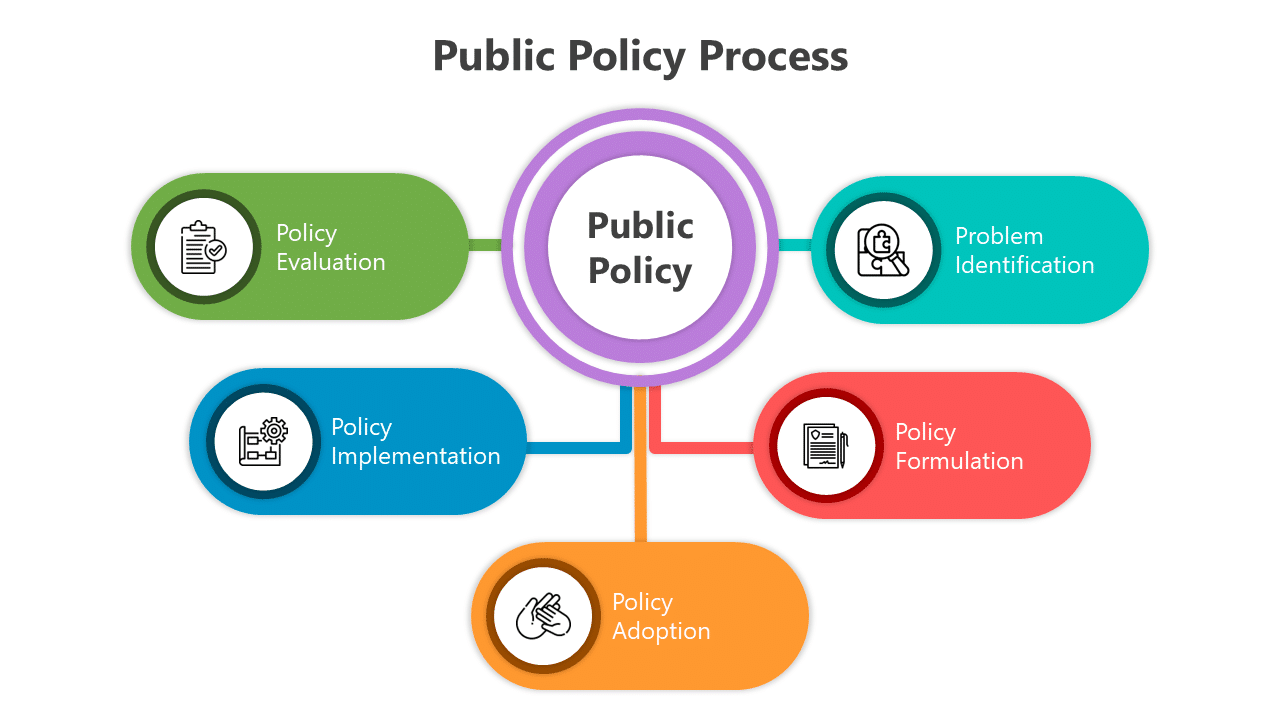
Making policy is a difficult task. It requires several levels of information checks. Policy process is a cycle that ensures that the rules are effective and up to date. I’ll share 5 steps of the policy process that every policymaker should keep in mind while creating one:
Plan: Identify the need and gather ideas from staff.
Communicate: Make the policy using simple language.
Check and Approve: Inspect and get approval from the leaders.
Share and Train: Send it to the team and explain.
Monitor and Update: Monitor its functioning, and make amendments.
What are the Four Types of Policy in Management?
Various policies differ in their objective and effects on the organization. There are four categories of managing policy.
Distributive: Shares such resources as budgets or benefits.
Regulatory: Regulates behaviours by means of rules, e.g., safety rules.
Redistributive: Redistribution of resources across groups, such as fair pay policies.
Constitutive: Establishes new rules, new structures of operations.
What are the 4 P’s of Policy?
These four aspects ensure strong and easy-to-comprehend policies.
Power: It refers to a people or a group of individuals who support or oppose an issue.
Perception: It depends on the public and decision makers’ point of view.
Potency: Significance of an issue, which means how severe the issue is, and whether it will require immediate attention.
Proximity: It depends on the issue, which means issues that directly impact the people.
Related: Top 8 SEO Link Building Companies
Why Organizations are Turning to Policy Management Software?
The main reason behind organizations turning toward policy management software is to automate the manual operations with an automated and efficient system. This minimizes errors and will save time.
These tools will make policy strict and eventually make people follow those rules and regulations. It also helps in complying with complicated rules in sectors like healthcare and finance.
Main Reasons for Policy Management Software Adoption
Handling policies manually usually results in useless documents, ignorance of updates, and gaps in applying them.
It automates the process of approvals, distribution, and tracking of work.
The laws, such as GDPR (General Data Protection Regulation) or HIPAA (Health Insurance Portability and Accountability Act), present more complicated regulations to businesses.
Cloud-Based Policy Management Software? Explained
Cloud computing policy management applications provide the policy on the internet-hosted servers that are easy to access and modify without the use of on-site hardware installation. It stores policy on the cloud and allows members to create, approve, and edit at their convenience on any device.
Key Features
All the policies are stored in a single location in the central online library.
Role-based access controls determine who can modify the documents.
Automated approvals, notifications, and reminders.
Version history records the edit history, including the timestamps and authors.
Compatible with smartphones and tablets.
E-signatures and read receipts indicate acknowledgement of employees.
Major Benefits
Allows real-time updates that are viewable by all.
Enhances security through encryption, backups, and an audit trail.
Enhances legislation compliance, such as GDPR or HIPAA.
Time-saving, with automation of regular processes.
Allows remote working with no time or location limitations.
Expands with ease as the business expands without additional configuration.
Overview of Automated Policy Management Software
The automated policy management software automates the entire policy lifecycle of creation, review, distribution, and tracking of organizational policies, instead of using manual means such as emails and spreadsheets. It works with an intelligent workflow to maintain policies, reduce the number of mistakes, and save work hours every week.
Real Life Benefits of Automated Policy Management Software
Major successes of moving to automation:
Slashes compliance threats: Reduces fines and audits by 50 percent with automatic updates.
Increases productivity: Saves 70% efficiency within workflows, liberates employee time, and improves strategy.
Scales without difficulty: Does not require servers or additional expenses.
Powers remote work forces: Mobile access keeps all people in touch.
Saves on cuts and costs.
What is Audit-Ready Policy Tracking?
Audit-ready policy tracking is a feature of policy management software that automatically records all policy interaction, including who accesses policies. This removes the mess of paper trail or lost emails. It contains time stamping, user information, version records, and personalized reports that identify gaps early and enable teams to minimize risks.
Related: Top 10 Free & Paid AI SEO Tools
Explain Risk and Compliance Management
Risk and compliance management assist companies in identifying threats. It helps organizations to comply with regulations and avoid any loss or penalty. It is divided into easy components that are like a defense mechanism of a team.
What is Risk Management?
Risk management implies the identification of potential risks that could damage the company. Including risks of data breach or demand decline in the market.
Find out the threats and fix them.
Secure it with insurance and backups.
According to Forbes, 70 percent of leading companies have become strategic in their risk management to ensure growth.
Compliance Management Explained
Compliance means following the external rules while maintaining the internal standard for avoiding fines.
Be aware of the rules, policies, and train employees accordingly.
Maintain a yearly update.
Forbes research shows that in HIPAA cases, compliance management programs reduced breach costs by 46%.
What Does Compliance Management Improve? Real Benefits
Millions saved (average breach 14M).
Increase confidence with customers.
Requires only 30% of the budget, which means a lesser investment and greater benefits.
What are Policy Management Software Vendors?
Policy management software vendors are companies that develop digital tools. It enables businesses to develop their rules and guidelines in the easiest way possible. Teams can share them, update, and track them all in a single location. These platforms ensure that everyone is accepting and following the policies of the company. The following policy management software vendors are highly in demand right now.
VComply
PowerDMS
NAVEX
LogicGate
Workiva
What Factors Decide Policy Management Software’s Pricing?
The pricing of policy management software is dependent on the critical company variables.
Main Factors:
User base: Per-user licensing is cost-effective.
Contract term: The longer the contract term (1-3 years), the cheaper the price is.
Add-ons and features: The basic options are inexpensive, but add-ons such as AI workflows or integrations are priced at a premium.
Organization: Depends on the team’s size. Small teams are less expensive compared to those that have 250+ users.
Other Factors:
Tailoring requirements: Data migration or role-based access customization adds costs.
Support and training: Premium services, implementation, or maintenance are double the base prices.
Also Read: Top 10 Investment Accounting Software & Other Related Software
8 Best Policy Management Software
All software has its own peculiarities of policy management. Here are some policy management software with a 4+ rating on Capterra.
1. Risk Hawk (4.7)
It has compliance and audit real-time dashboards, unique workflows, policy management, risk heat maps, fully integrated GRC platform.
Pros: Easy interface, high degree of configuration, the presence of customer support, and linking modules.
Cons: Small number of color themes/ customization, old-fashioned dashboard reports, user-based licensing with no unlimited option.
2. PowerDMS (4.7)
Useful for public safety, cloud-based, including policy authoring, e-signatures, quizzes, mobile access, and accreditation support to 18,000+ agencies.
Advantages: The strong revision history, compliance proof analytics, and easy use by large groups.
Disadvantages: Enterprises will be more expensive, and custom setups have a steep learning curve.
3. Onspring (4.8)
No-code GRC and policy templates, drag and drop customization, risk analysis, and dynamic dashboards.
Advantages: Can be configured to a great extent without coding, has great reporting, and scalable audits.
Disadvantages: Can be very overwhelming to small teams as custom quotes are needed.
4. Termly (4.7)
Generator of privacy policy (GDPR/CCPA), cookies, one-click terms, and customized templates.
Advantages: Rapidly creates legal documents at a price one can afford.
Cons: Lacks complete management processes. Templates are intensive but not profoundly automated.
5. A1 Tracker (4.9)
It comes with features like Policy Creation, Compliance Management, Approval Process Control, Policy Metadata Management, Single Sign On (SSO) Software, and more that can help in the automatic policy process.
Pros: It comes with customizable dashboards, top-tier support, and robust reporting, which make it a useful tool for an organization.
Cons: It has limited options for data import and has a complex search option.
6. Scrut Automation (4.9)
It is a document management software that comes with a full pack of management tools like audit management, policy creation, version control, and customizable templates.
Advantages: It has more than 100 customizable policies made according to SOC 2/ISO 27001. Its other benefits include gap analysis and workflow automation.
Disadvantages: The biggest drawback is that it doesn’t have policy metadata management.
7. Tandem Software (4.8)
Useful for large-scale organisations. It includes features like 50+ policy templates. You can create a source of income that comes with easy access to team members.
Pros: Features like policy libraries, risk assessments, and audit tracking are highly useful.
Cons: Some customer reviews suggest that it takes time to load, and some of the modules lack detail.
8. PMAM HCM (4.8)
It comes with both onsite and offsite features. The software helps in limiting liability suits and increases policy adoption.
Advantage: It has an effective and responsive support system. Its policy tracking lets team members be up to date.
Disadvantage: No major issue was found, but complaints are about its occasional lagging and setup difficulties.
Related: Forbes’ Top 20 Highest-Paid Female Athletes
Comparison Between Policy Management Software
SoftwarePrice Range (USD)Cloud-BasedRisk HawkQuote (~$20/user/mo – ~$50+/user/mo)Yes (SaaS)PowerDMS~$40/user/mo – Quote ($100k+/yr)Yes (Cloud)OnspringQuote (~$50/user/mo – large-scale custom)Yes (Cloud)Termly$0 (Free) – $15/website/mo (Pro+)Yes (SaaS)A1 TrackerAround $30-70/user/monthly (Based on enterprise)Yes (SaaS)Scrut AutomationCustomisable plan ($10k-30k/year)Yes (Cloud)Tandem SoftwareEnterprise plan (~$20-50/user/monthly)Yes (SaaS)PMAM HCMAround $1,800/year for up to 20 usersYes (SaaS)
Quick Comparison between Cloud-based and Automatic Software
Applications that run on remote servers through the internet are considered cloud-based software, and automated software may include self-updating software, workflow software, or AI-powered processes, which are often also cloud solutions.
Key Differences Between Cloud-Based and Automatic Policy Software
Cloud-based focuses on the deployment and accessibility; the operational efficiency without manual intervention is emphasized in automation. Cloud solutions often involve automation, although not all automatic software is hosted in the cloud (e.g., on-premise bots).
AspectCloud-BasedAutomaticDeploymentRemote servers, the internetVaries (rules/scripts)AccessibilityAnywhere onlineDevice or remoteMaintenanceVendor-managedSelf-executingExamplesTermly, Onspring Sprinto, ProHance
Choose the policy management software from the above list according to your needs and share your experience in the comment section below.
Related: Top 10 Investment Accounting Software & Other Related Software
The post What is a Policy Management System? 8 Best Policy Management Software appeared first on The Next Hint.