

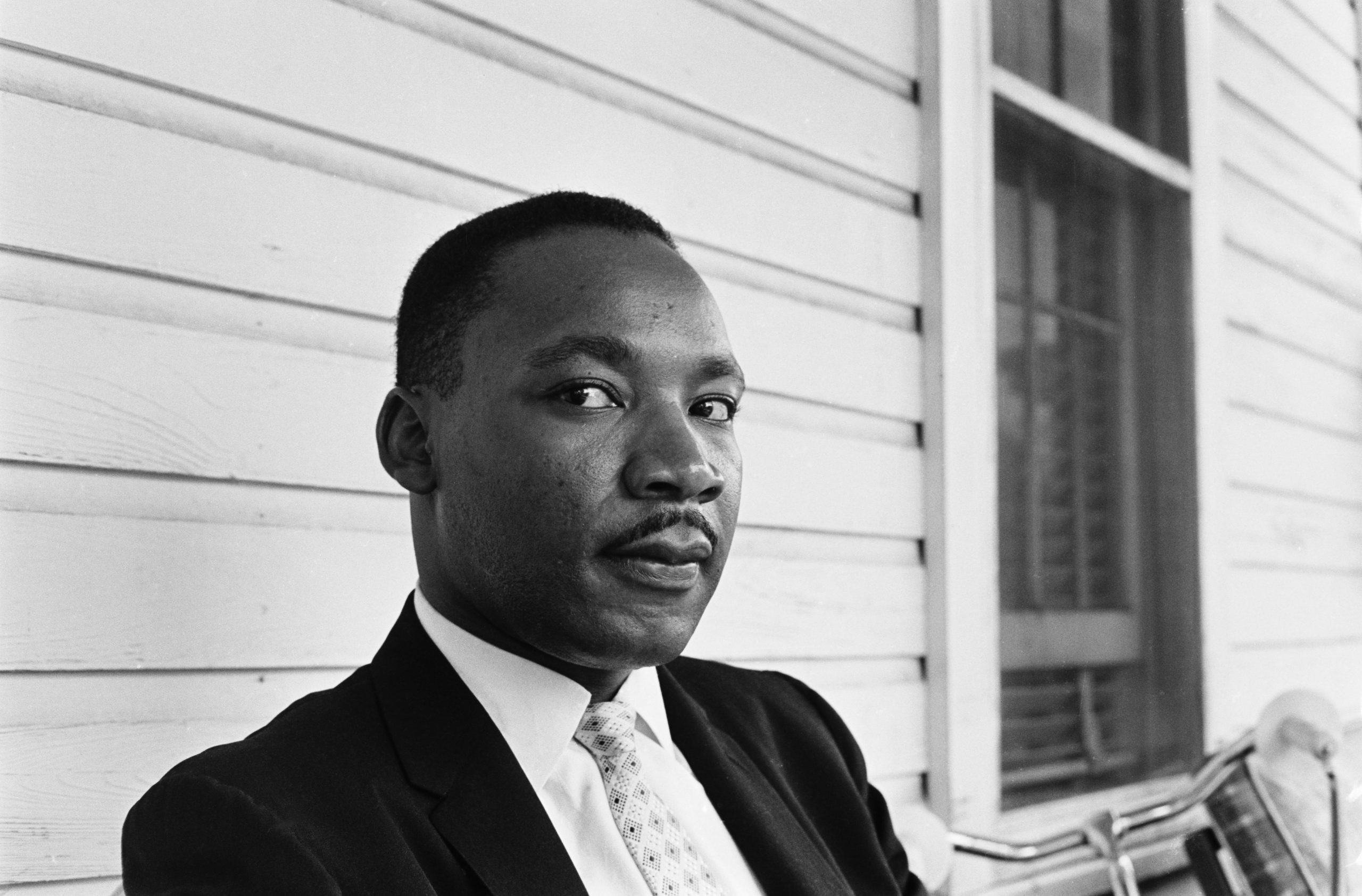
This week, one day after a federal holiday celebrating the Rev. Dr. Martin Luther King, Jr.’s birthday, Nike announced a new sneaker in the LeBron XXIII collection: “Honor The King.” The shoe, which will retail for $210 in February, is the same turquoise hue as the Lorraine Motel in Memphis where Dr. King was shot and killed in 1968.
[time-brightcove not-tgx=”true”]
This sneaker is not a tribute, rather, it is a symptom of how capitalism sanitizes and commodifies moral struggle. By collapsing Dr. King’s moral authority into a consumer product, Nike and Lebron James are missing the plot. At a moment when protest is criminalized and civil rights are under attack, turning justice into merchandise doesn’t honor history; it empties it of its meaning.
Dr. King’s life was rooted in risk, sacrifice, and confrontation with power. At the time of his death, Dr. King was in Memphis to support Black sanitation workers on strike for better pay and working conditions as he built momentum for the Poor People Campaign.
His moral authority did not come from visibility, popularity or influence. It came from conviction in the face of risk, and he was assassinated for using his voice. Dr. King’s power was not symbolic; it was structural, and earned at extraordinary personal cost.
James, by contrast, is one of the most powerful athletes and cultural figures alive. His influence is real, and he has used his platform to speak out on social issues and to fund educational initiatives that have made a tangible difference. But celebrity power and moral authority are not the same thing. One is amplified by capital; the other is forged in opposition to it.
When Nike ties Dr. King’s assassination to a consumer product, it makes light of his sacrifice. This is not commemorating his life. It is commodifying his death.
What is excluded from Nike’s launch is an acknowledgement of stakes Dr. King faced as he challenged systems that profit from inequality. There are no police dogs, jail time, or federal wiretaps in this sneaker campaign.
Read more: Maduro’s Nike Tracksuit and the New Visual Language of Power
To be sure, there have been times when Nike got it right. In 2018, the company partnered with Colin Kaepernick, whose protest against police brutality had effectively ended his NFL career. That campaign did not collapse dissent into vague symbolism; it named the sacrifice. The brand absorbed real risk—consumer backlash, political condemnation, financial uncertainty—by aligning itself with a figure whose resistance was ongoing and materially consequential.
Whatever one thinks of Nike’s broader labor practices or corporate contradictions, the campaign grasped a basic ethical distinction: Solidarity that means anything must involve exposure to loss.
Too often, Dr. King is presented as a market-safe myth. In his lifetime, he was surveilled by the state, condemned by the press, and rejected by most Americans. What is offered in Nike’s turquoise sneaker is a softened, market-safe version of his legacy, stripped of its demands.
This flattening is dangerous because it reshapes how we understand activism itself. Justice becomes a form of personal expression rather than collective risk. Solidarity becomes something you signal rather than something you practice. Struggle is no longer something you enter; it is something you consume.
Corporations often defend these gestures by pointing to shared values. But alignment here is not declared; it is demonstrated. If a company wanted to call attention to Dr. King’s life and death, they should express the seriousness of the cause he gave his life to.
Read more: Why We Are Fighting For Ben & Jerry’s To Be Independent Again
It is impossible to know whether Nike was overly ambitious in their hopes to discuss this nuance through the medium of a sneaker, or neglected the seriousness of the matter. Intent aside, Nike’s sneaker has missed the mark.
This is a shame, because corporate America has a tremendous opportunity to meet this moment. Federal agents are swarming Minneapolis and other American cities, tackling people outside of their places of work.
And while many companies chose to issue statements, often invoking the words of Dr. King, in the aftermath of the killing of George Floyd, few companies have demonstrated the same resolve in 2026.
Maybe it is better for Nike to have tried to say something than not have said anything at all. But this recent sneaker points to a bigger question facing many companies in 2026: What are corporations willing to put on the line for their values?
Dr. King gave his life for his.