

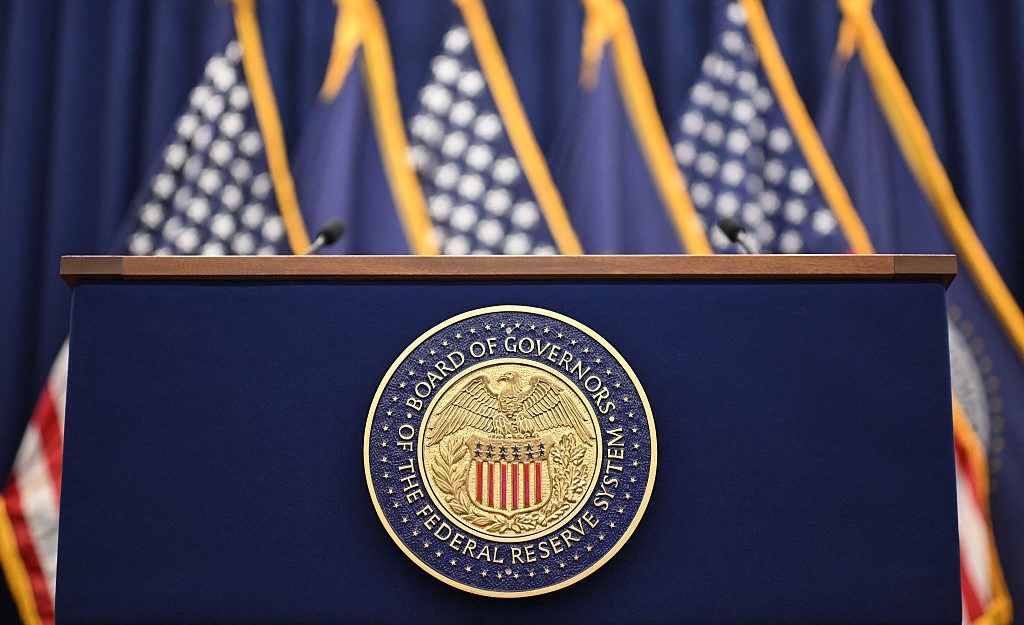
To many, the fight between President Donald Trump and the Federal Reserve Chair Jerome Powell may seem just one of the many ongoing skirmishes as the MAGA movement attempts to root out and reclaim “elite” institutions—the so-called “Deep State” which has dictated the country’s future behind the scenes.
It is reasonable for a political movement to question the need for old institutions. Some institutions, however, are worth preserving. An independent Fed is one of them. And we shouldn’t preserve Fed independence for old times’ sake. We should do so because an independent Fed benefits us all.
[time-brightcove not-tgx=”true”]
Central banks across the world were established for different reasons; the Bank of England got its charter in 1694 in return for promises to fund the government; the Fed was set up in 1913 to prevent the kind of financial instability the U.S. experienced after the failure of the Knickerbocker Trust. But the primary role of a modern central bank has shifted towards stabilizing the value of the domestic currency by keeping price increases, that is, inflation, at a low level: around 2% in the case of the Fed.
No consumer likes paying higher prices, even if their wages have kept pace, but especially if they have not. High post-pandemic inflation, perhaps most evident in the price of eggs, which became unaffordable to many American households, arguably cost the Democrats the 2024 election. But the “affordability crisis” isn’t going away, and Republicans are now worried about its possible impact on the midterms.
Bringing down inflation is, however, painful. It typically requires the central bank to raise and keep interest rates high so that consumers and firms borrow less and curtail their spending. As demand for goods and services falls below the economy’s ability to supply them, spare capacity builds up, and companies no longer feel compelled to raise prices. Unfortunately, they may also lay off workers they no longer need. Higher interest rates, slower consumption and investment, and higher unemployment are the costs of fighting inflation—costs no politician focused on winning the next election wants.
The temptation for any incumbent administration is therefore to let the economy run “hot” and deal with rising inflation after the next election. Indeed, politicians sometimes fuel spending and inflation by sending people checks to compensate for past inflation.
Unfortunately, the longer inflation remains unaddressed, the higher prices can climb, and equally important, the more people come to expect inflation will be high. These entrenched higher expectations then raise the wages workers demand, the prices entrepreneurs charge for their services, as well as the interest rates investors expect on their long-term investments. In this way, inflation can become self-reinforcing.
This is indeed what happened in the United States in the 1970s, when inflation was allowed to climb. The Fed, under Chair Paul Volcker, eventually brought it under control, but only after two wrenching recessions in the early 1980s. The lesson countries imbibed is that inflation is best nipped in the bud, before it gets a chance to grow into something worse.
For the central bank to act at the first sign of sustained inflation, it must operate efficiently and independently. And it is crucial that it not be constrained by the incumbent administration’s political priorities. This is why the first version of the Banking Act of 1935, which originally had the leader of the Fed serving at the pleasure of the President and had the Secretary of the Treasury chairing the Fed Board, was changed. After strong pushback from businesses, politicians, and economists, Fed governors were ultimately given 14-year terms so that they could have a horizon much beyond any election; their terms were staggered so that any U.S. President could appoint only a couple during their term. The Fed Chair was to be appointed for four years, and the Treasury Secretary no longer had any role on the Board. The Fed Chair and Fed Governors could be removed before the end of their term only for cause, which is generally taken to mean moral turpitude rather than differences in opinion with the administration over how the Fed meets its mission.
Unfortunately, Trump acts as if a difference in opinion constitutes cause. The President has made no secret of his desire that the short-term interest rate the Fed sets be lowered to around 1%, in part to bring long-term mortgage rates down and revive housing construction. However, economic realities make this option incongruent with both the Fed’s mandate and Trump’s own goals.
Inflation has been above the Fed’s target for roughly five years; stimuli from the One Big Beautiful Bill and buoyant financial markets are likely to raise consumer spending; AI-related investment spending is at extraordinarily high levels; and curbs on immigration will likely limit the supply capacity of the economy. Given all this, most economists would argue that cutting rates drastically would raise inflation. And higher inflation would push up long-term mortgage rates, ensuring the Trump Administration’s objectives are not served.
Higher long-term interest rates, especially if they are enhanced by the additional premium investors typically demand for inflation risk, are also dangerous at the current juncture for the government’s finances. Congress has shown little concern about the fiscal deficit, which is extraordinarily high for an economy growing so strongly. Typically, deficits expand in recessions because of lower tax revenues and additional spending on unemployment benefits. With U.S. debt standing above 100% of GDP, higher interest costs from refinancing maturing debt—as well as from the new debt needed to fund the deficit—will increase deficit spending yet more, contributing once again to inflation.
That’s why it is in the best interest of all Americans that Trump let the Fed do its job. No doubt, the Fed has made mistakes in its fight against inflation. I have been one of its critics. But mistakes are almost inevitable given the extraordinary turbulence created by the pandemic and the associated government response (as well as the current policy upheavals). What cannot be doubted is the Fed’s intent, including Chair Powell’s determination to do the best job he can for the American people. Indeed, the markets seem to think the Fed will be successful, with market expectations of inflation five years from now anchored solidly around 2.25% over the last few years.
The President is the outlier. Convinced that his approach is better, Trump has tried to pressure the Fed, not just through public jawboning (which previous administrations have also engaged in) but most recently with the Department of Justice announcing a criminal investigation into Chair Powell for his Congressional testimony on the renovation of the Fed’s offices. Ironically, one of the buildings in question is the Marriner Eccles Building, the very structure the Fed moved into in 1937 to signal its independence from the Treasury, where its offices had previously been.
Given that Powell’s term as Chairman is about to end, the rationale for investigating someone whose integrity is unquestioned is unclear. Some speculate that it is intended to force Powell to resign his governorship, which would otherwise continue till 2028. Be that as it may, the message is clear: cross the White House at your peril.
The Fed does not pay its governors anywhere near what they might earn in the private sector. The job is primarily an opportunity to serve the public. If, however, the job entails the choice of subservience to the government against one’s professional instincts, or being the target of insults, innuendo, and criminal investigations, it is hard to imagine that it will continue to attract professionals of the highest caliber. Almost surely, this will undermine the institution’s credibility, built over the decades since Volcker, and consequently affect inflation expectations, the value of U.S. debt, and the dollar.
To be sure, the elected representatives of the people deserve some say over monetary policy. In other countries, they have the right to review the mandate of the central bank periodically and to change it—for instance, by modifying the inflation target. But once the mandate is set, the central bank has operational independence. It decides what rate to set to achieve the target. Perhaps the United States should move in this direction, with the Fed’s mandate set by the administration in consultation with Congress every 10 years or so. Rather than a continued brutal power play, which will leave no winners, hopefully the confrontation between the Fed and the administration will move toward some such compromise.
In decrying Trump’s attacks against Chair Powell, a bipartisan group of former U.S. Fed chairs and former Treasury officials wrote, “this is how monetary policy is made in emerging markets.” But I ran a central bank in an emerging market. While political leaders pressed me to lower interest rates, they invariably backed off at some point. They did put some weight on my professional opinion. But they also knew if they forced compliance, there would be no one to blame if things went wrong.
An independent central bank is a useful scapegoat.
If nothing else, that is worth the President’s consideration.