

[time-brightcove not-tgx=”true”]
More than 880,000 people have been left without power by a massive winter storm that has sown chaos across the South and the Midwest and is now barreling toward the East Coast.
Over 200 million people across the country were under some kind of weather alert as of Sunday morning. Power outages have mostly affected homes in the South, including in Tennessee, Texas, Mississippi, and Kentucky, where large snowfall is rare.
The storm’s dangerous mixture of heavy snow, sleet, ice, and bitter cold threatens to trap millions indoors for days. Travel has been severely disrupted, with around 11,000 scheduled flights canceled on Sunday—the most in a single day since the COVID-19 pandemic. More than 1,800 flights in the U.S. have already been canceled for Monday.
Read more: People Are Panic Buying for the Winter Storm. An Expert Explains Why We Do It
President Donald Trump described the storm as “historic” on Saturday and said he had approved federal disaster declarations for several states—including South Carolina, Virginia, Tennessee, Georgia, North Carolina, Maryland, Arkansas, Kentucky, Louisiana, Mississippi, Indiana, and West Virginia.
By late Saturday afternoon, the Department of Homeland Security (DHS) said that 17 states and the District of Columbia had declared weather emergencies.
“We just ask that everyone would be smart – stay home if possible,” DHS Secretary Kristi Noem said.
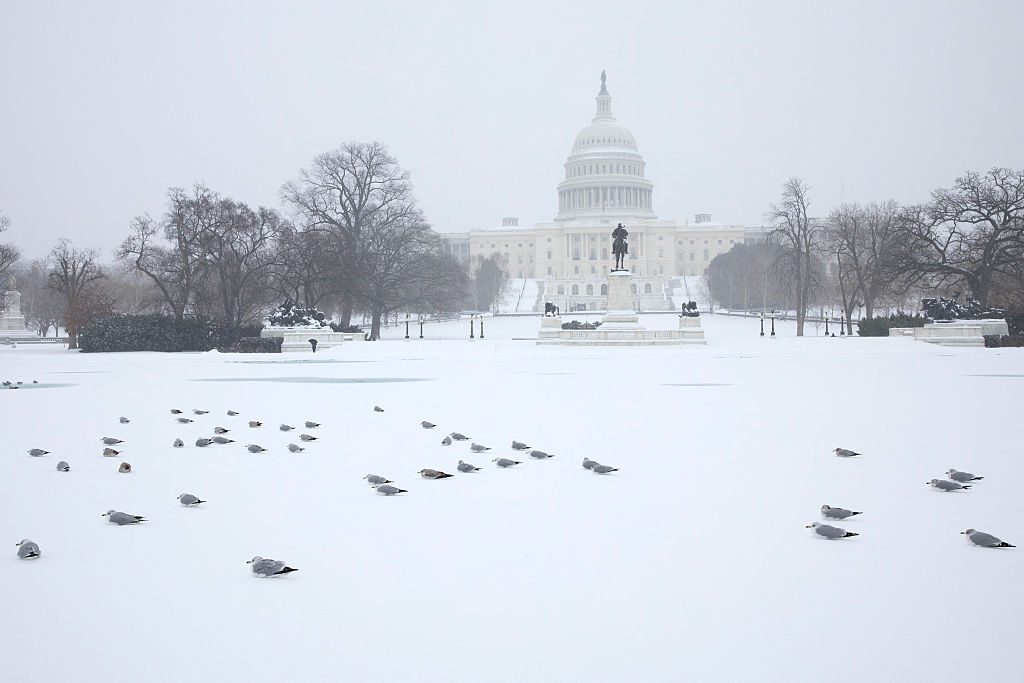
By Sunday morning, the storm began to hit New England and much of the eastern third of the United States. The National Weather Service (NWS) expects up to 18 inches of snow across New England, with close to a foot in major cities like New York City and Philadelphia.
Experts warn the storm could become particularly dangerous due to the freezing temperatures forecast to follow closely behind it. As snow turns to sleet and freezing rain, roads could be coated with ice, and powerlines could freeze.
“In the wake of the storm, communities from the Southern Plains to the Northeast will contend
with bitterly cold temperatures and dangerously cold wind chills,” the NWS said in its early Sunday morning update. “This will cause prolonged hazardous travel and infrastructure impacts.”
Three people were found dead on Saturday in New York City, according to the local NBC affiliate, as feels-like temperatures dropped into the negatives—a season low for the area—and local leaders called for residents to stay home and to take precautions. Warming centers opened across the five boroughs, and other city governments have listed local recreation centers and buildings to serve as heated shelters.
Zohran Mamdani, tackling his first major weather event as NYC Mayor, announced a remote learning day for the city’s schools “to keep everyone safe from hazardous weather conditions.”
He added on social media that his teams were “scouring the streets, offering shelter to homeless New Yorkers, and helping bring people inside.”
From Atlanta to Washington D.C. to Boston, transit authorities spent much of the weekend before the storm salting roads, sidewalks, and routes, while urging residents to stay home Sunday.
Philadelphia’s public transit, the SEPTA, said in a news release that “it is possible that some services will be entirely suspended” as ice might impact infrastructure, while Atlanta’s MARTA said that the only bus routes available Sunday would be “lifeline routes” that provide direct service to medical facilities and emergency rooms.