

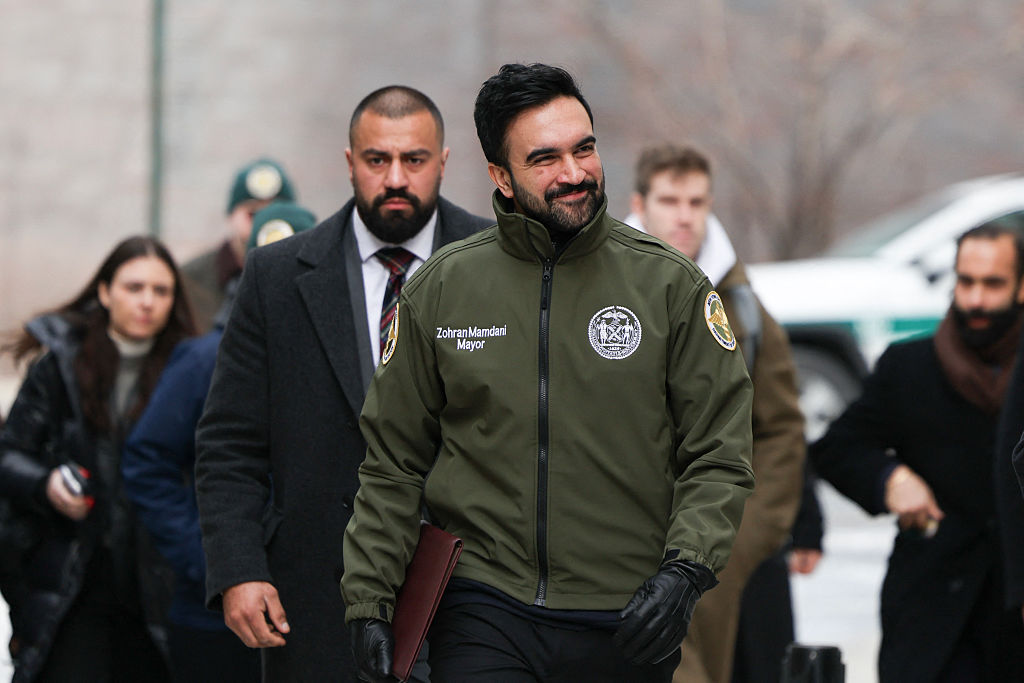
New York City Mayor Zohran Mamdani has tackled his first major test since he was sworn into office, readying the city for a historic winter storm that dropped more than a foot of snow in some areas over the weekend.
Winter Storm Fern, which forecasters predicted could affect more than 230 million people across the country, brought heavy snowfall, damaging ice, and below-freezing temperatures to a number of states over the past few days. The inclement weather led to thousands of canceled flights, as well as power outages that affected more than 1 million people. More than a dozen people died during the storm, including seven in New York City. The deaths in New York City are still under investigation.
[time-brightcove not-tgx=”true”]
“It is still too early to share a broader diagnosis or a cause of death,” Mamdani said during a press conference. But, he continued, “We haven’t seen this kind of cold for eight years, and it is debilitating.”
Read more: ‘A Politics of No Translation.’ Zohran Mamdani on His Unlikely Rise
The storm was the first significant weather event in the city since Mamdani succeeded former mayor Eric Adams on Jan. 1. And, according to many residents and prominent local figures, Mamdani proved up to the task of handling it.
Here’s how the new mayor responded to the storm.
What steps did Mamdani take to prepare for the storm?
In the days leading up to the storm’s arrival in New York City, Mamdani held several press briefings, appeared on multiple news networks, and posted many videos on his social media platforms to keep the public updated on the forecast and how the city was preparing for the anticipated storm. He urged New Yorkers to stay home on Sunday, when the worst of the storm was expected to blow through the city—and he did so with some humor.
“I can think of no better excuse for New Yorkers to stay home, take a long nap, or take advantage of our public library’s offer of free access to Heated Rivalry on e-book or audiobook for anyone with a library card,” he said during a press conference on Sunday.
Under his leadership, the city opened 10 warming centers across all five boroughs for residents who needed a safe and warm space. And staffers at the Department of Homeless Services “relaxed intake procedures” and conducted “intensified outreach across all five boroughs,” in an effort to connect people who are unhoused with shelter and warming centers, the city said.
The city also set up an informational hotline of sorts—residents could stay up-to-date on the storm and the city’s response by texting NOTIFYNYC to 692-692.
Read more: ‘Historic’ Storm Leaves Several Dead, Thousands of Flights Canceled, and a Million Without Power
Department of Sanitation workers started pre-salting streets, highways, and bike lanes on Friday, before the worst of the storm hit. The city said the department would deploy about 2,000 workers on 12-hour shifts, and that it would be plowing streets with 700 salt spreaders and more than 2,000 plows. Thousands of the department’s trucks were converted into snow plows, according to Mamdani. The mayor said that crews would begin salting neighborhoods in every borough as soon as snow started falling, and that plows would start rolling out in the city once there was more than 2 inches of snow on the ground.
The mayor also advised families that the inclement weather might force New York City Public Schools (NYCPS) to shift to remote learning on Monday—and ultimately, he and the NYCPS chancellor decided on Sunday to make that call.
“As snowfall begins to blanket our city and conditions become hazardous, closing school buildings is a necessary step to keep New Yorkers safe,” Mamdani said in a press release. “Over the past week, my administration has prepared for this moment—ensuring devices are in hand, families are informed and educators are ready to welcome students online. Our school system, and our city, is prepared to weather this storm together.”
Mamdani also repeatedly reminded New Yorkers to call 311 if they saw anyone who needed assistance during the storm.
“We will get through this storm the way we always do—by looking out for one another,” he said in a press release on Saturday.
What local groups and leaders have said about Mamdani’s handling of the storm
Overall, the response to Mamdani’s handling of the storm was fairly positive.
A video of Mamdani shoveling snow in Brooklyn to help a driver whose car appeared to be stuck in the snow circulated on social media over the weekend, generating praise from some users.
“Wow—that’s hand on leadership!” the United Jewish Organizations of Williamsburg and North Brooklyn said when reposting the video on X. “Thank you @NYCMayor for being out on the streets ensuring that the city is moving.” The following day, the group went on to thank the Department of Sanitation for the “great job in clearing the streets, and continuing to clear them,” as well as Mamdani’s administration for its “close cooperation, checking in that all OK (in addition to mayor’s personal visits and assisting those stranded).”
The new mayor even received approving nods from some of his critics.
“Credit where due, looks like @NYCMayor is handling this storm very well so far,” Benny Polatseck, an aide to Adams who has criticized Mamdani in the past, said in a post on X on Sunday. Polatseck, though, later posted on X on Monday afternoon that he was “hearing from some outer borough folks that they haven’t seen a plow truck yet,” asking people to share their experiences. The city has created a website that gives residents real-time updates on whether their street has been plowed yet.
The city’s response to the storm wasn’t without hiccups. Some families told Gothamist they had issues accessing remote learning for their kids on Monday, although school officials said that there was a “smooth start to the day” and that the majority of students and teachers were able to access the portal.
Julie Menin, the City Council speaker, praised the city’s response, while also pointing out some flaws.
“There are areas where emergency response has been stretched and needs to improve, and the Council will be closely engaged in addressing those gaps,” she said in a statement to the New York Times. “But the scale of the effort today reflects how seriously our essential workers take public safety, and the crews on the ground deserve real credit and gratitude from the millions of New Yorkers who rely on them.”