

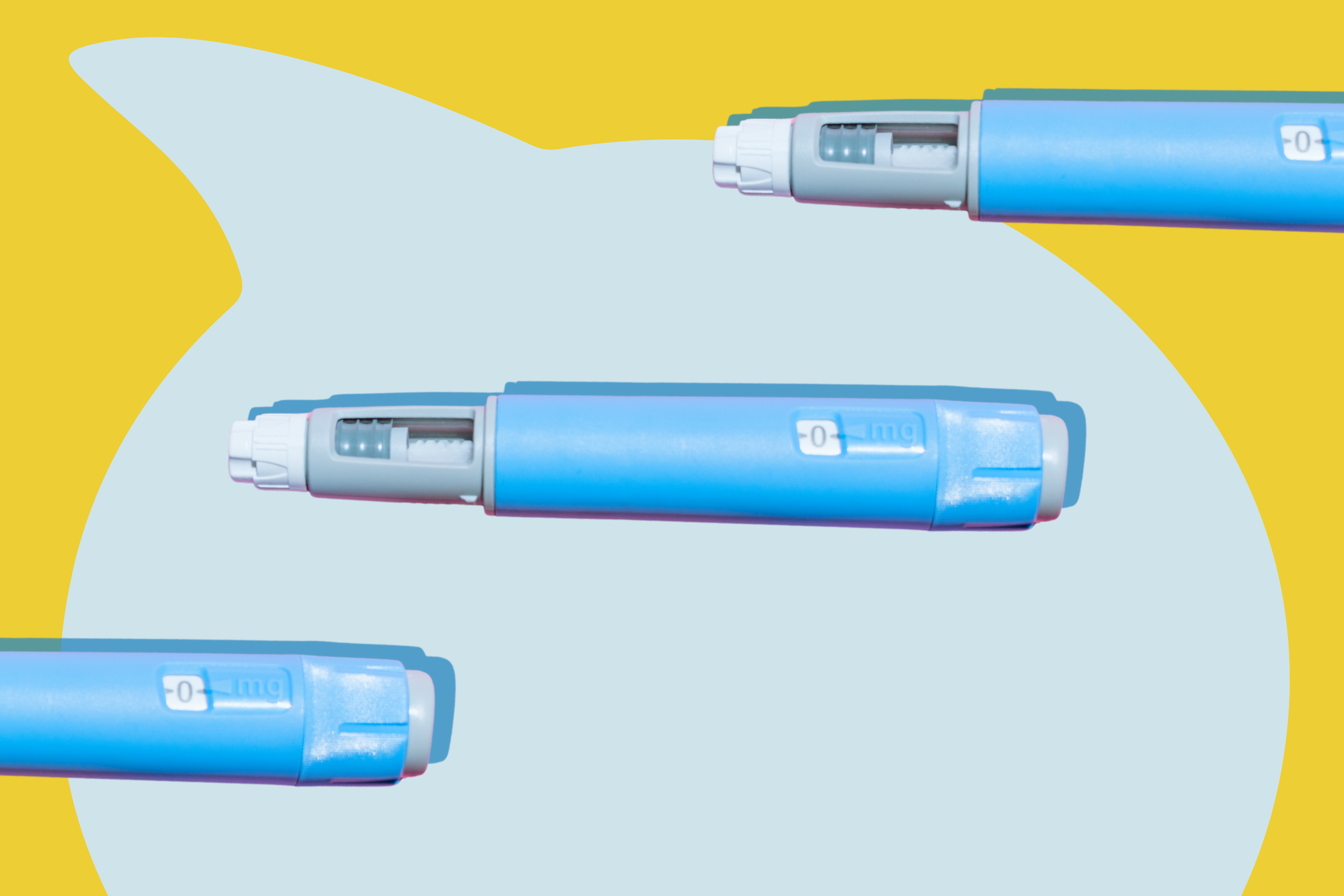
Weight loss now comes with a silent asterisk. When bodies change quickly or noticeably, assumptions often follow—and so does the desire to ask one potentially fraught question: Did medication play a role?
GLP-1 drugs like Ozempic and Wegovy are testing the boundaries of body talk, leaving many unsure what’s fair or polite to ask, experts say. Here’s how to navigate these conversations.
Consider your intentions
[time-brightcove not-tgx=”true”]
Dr. Whitney Casares, a pediatrician in Portland, still remembers the time an acquaintance whispered those four loaded words: “Are you taking Ozempic?” Casares was, in fact, on a GLP-1 medication, but she wasn’t broadcasting the news to people on the periphery of her life.
“I could tell, by the way she was saying it, that it was like, ‘We’ve all been talking about you, and I’m the designated person who was sent over to find out all the deets,’” she says. “That felt terrible, because it wasn’t someone I was close with, and it wasn’t someone who was disclosing anything about their own journey. They just asked me point-blank about my own.”
Read More: 15 Things to Say When Someone Comments on Your Weight
Before even considering such a conversation, ask yourself why you want to know, Casares advises. “Are you asking because you feel jealous of that person?” she says. “Are you asking because you also want to go on a GLP-1, or are you asking because you’re nosy and need to know what’s going on in everybody else’s life?”
Why you’re asking is the most crucial factor in figuring out what’s OK to say, agrees Rachel Goldman, a psychologist and clinical assistant professor in the department of psychiatry at NYU Grossman School of Medicine. If you’re asking because you’re trying to figure out if a GLP-1 makes sense for you, “I think it’s OK,” she says. “But if you’re just asking because you’re curious, you don’t need to know.”
The way you phrase it makes a difference
If you’re truly trying to understand and learn from somebody’s experience, make that clear from the onset. Aim to be mindful, compassionate, and respectful, Goldman says, and open the conversation in a kind, non-assuming way.
You might phrase it like this, for example: “I’ve noticed you’ve been making some healthier choices. I’ve been thinking about starting a GLP-1, and I’m wondering if you’ve thought about it.” That gives the other person an out—they can easily brush off or shut down the conversation if they’d rather not get into it.
If you know for certain someone is taking weight-loss medication, Goldman adds, you could broach it like this: “I’ve been struggling with my weight. Would you be open to a conversation about your experience?” That way, “You’re already showing that vulnerability on your side, which then creates a safer space for the other person to open up if they want to,” she says.
Read More: No One Knows How to Talk About Weight Loss Anymore
Tone matters, and curiosity always trumps judgment. Revealing that you’re asking for a personal reason “is so different to me than someone coming up and saying, ‘Are you on a GLP-1?’ with this smirk or with this air of, ‘It would be shameful if you were,’” Casares says.
If someone has been transparent about their journey with GLP-1s, it’s OK to ask specific follow-up questions, she adds. One caveat, though: Don’t bring up the subject loudly or in front of other people. “This should be a private conversation where people don’t feel like they’re backed into a corner and they have to either lie or disclose something they don’t feel comfortable disclosing,” Casares says.
What to say if you’re on the receiving end
Casares is pushing herself to be more open about her GLP-1 usage, in part to help chip away at the shame and stigma that’s sometimes shrouded her experience with the medication. She’s found that people typically start the conversation like this: “Wow, you look great! I didn’t even recognize you.”
“When that happens, I usually come back with, ‘Yeah, I’ve been taking a GLP-1, and it’s going so well. I love it.’ I try to say that as upfront as possible,” she says. If she can tell by the look in their eyes that they want to know more, she follows up like this: “I’ve had a lot of people who’ve asked me a lot of questions about GLP1s because they’re interested in them. I’m an open book. If you’re interested, I can tell you all about them.”
Read More: Is Giving ChatGPT Health Your Medical Records a Good Idea?
Of course, not everyone wants to make their private health information public—and you’re under no obligation to do so. Goldman regularly helps her clients come up with sample scripts of what to say when somebody asks them if they’re on a GLP-1, because many feel caught off-guard when it happens and don’t want to share.
Many have reported success shutting down the conversation with lines like these: “I’m making healthier choices. I’m going to the gym. I’m being mindful of what I’m eating, or I’m working with a health care professional.”
“What I tell my clients is, ‘You’re not lying,’” Goldman says. “‘You are making healthier choices. You are working with a health care professional. You are being more mindful about what you’re eating.’ It’s 100% up to you what you want to share.”
Wondering what to say in a tricky social situation? Email timetotalk@time.com