

Human beings are not going anywhere soon. There are 8.2 billion of us living on all seven continents—a population projected to grow to close to 10 billion by 2050. The rest of the world’s living inhabitants don’t have it so good. According to the Center for Biological Diversity, approximately 30% of known species are expected to have tipped over the cliff into extinction by that same 2050 benchmark. Now, however, there may be a way to protect them—or at least to preserve their genomes so that even if they do vanish, they could, in time, be brought back to walk or swim or fly the Earth again.
[time-brightcove not-tgx=”true”]
That’s the word from Colossal Biosciences, the company that last spring engineered the return of the dire wolf after 10,000 years of extinction. On Tuesday, Feb. 3, Colossal announced that it is collaborating with the government of the United Arab Emirates to create a biovault of millions of frozen cell and tissue samples from more than 10,000 species. They will be housed at the U.A.E.’s Museum of the Future in Dubai. The project will focus first on the world’s 100 most imperiled species—including the snow leopard, the savanna elephant, the great white shark, and the northern white rhino—with the goal of opening the biovault as early as next year.
“The Colossal BioVault should be up and running almost immediately,” says Matt James, the company’s chief animal officer. “Ten thousand species is our aspirational goal, and we will chase that by adding several hundred individuals [representing] several hundred species per year.”
The biovault will not just be a repository, but a functioning laboratory where visitors to the museum can watch scientists work. The data on genomes that are cached in the museum will be open-sourced, providing researchers and geneticists around the world with information on all 10,000 species, in pursuit of conservation or de-extinction projects similar to what Colossal achieved with the dire wolf. As the Dubai lab grows, Colossal and the U.A.E. hope to establish a global network of other biovaults that will allow various regions to store genomes of their own indigenous animals.
“Our vision is that there is a major Colossal BioVault in distributed regions around major biodiversity hubs around the world and then branching into smaller regional spokes throughout these key regions,” says Ben Lamm, co-founder and CEO of Colossal. “Over time, I envision seven to 10 distributed core Colossal BioVaults.”
The Colossal facility will by no means represent the world’s first cryogenically preserved collection of animal tissue and cells. Fifty years ago, the San Diego Zoo established what it calls its Frozen Zoo, which today is home to cell samples from 11,500 animals, representing 1,300 species or subspecies. At the time of the Frozen Zoo’s founding, the technology that allowed Colossal to genetically engineer the extinct dire wolf was unimagined, but the SanDiego Zoo likes to cite the words of geneticist Kurt Benirschke, one of the Frozen Zoo’s founders, who said at the time, “You must collect things for reasons you don’t understand.”
A similar mission has led to the establishment of several other collections of frozen samples around the world, including the Cornell University Biobank, the Barcelona CryoZoo Biobank, and the SANParks Veterinary Wildlife Services Biobank in South Africa. But the Colossal biobank network will be the largest and most ambitious to date. Colossal is working with 75 other conservation groups to collect cell and tissue samples from animals in the wild and send them to the Dubai lab. There scientists will sequence the samples and store the translated genomes in the open-source library. The samples themselves will then be transferred to laboratory freezers where they will be kept at temperatures as low as -320°F.
The scale of the new network—with each species represented by samples from many different individual animals—is key to its mission. In the wild, endangered species can become “genetically bottle-necked,” with too few animals to sustain a viable breeding pool without congenital malformations, recessive diseases, or sterility resulting. The same thing could happen in a biobank if too few samples are stored.
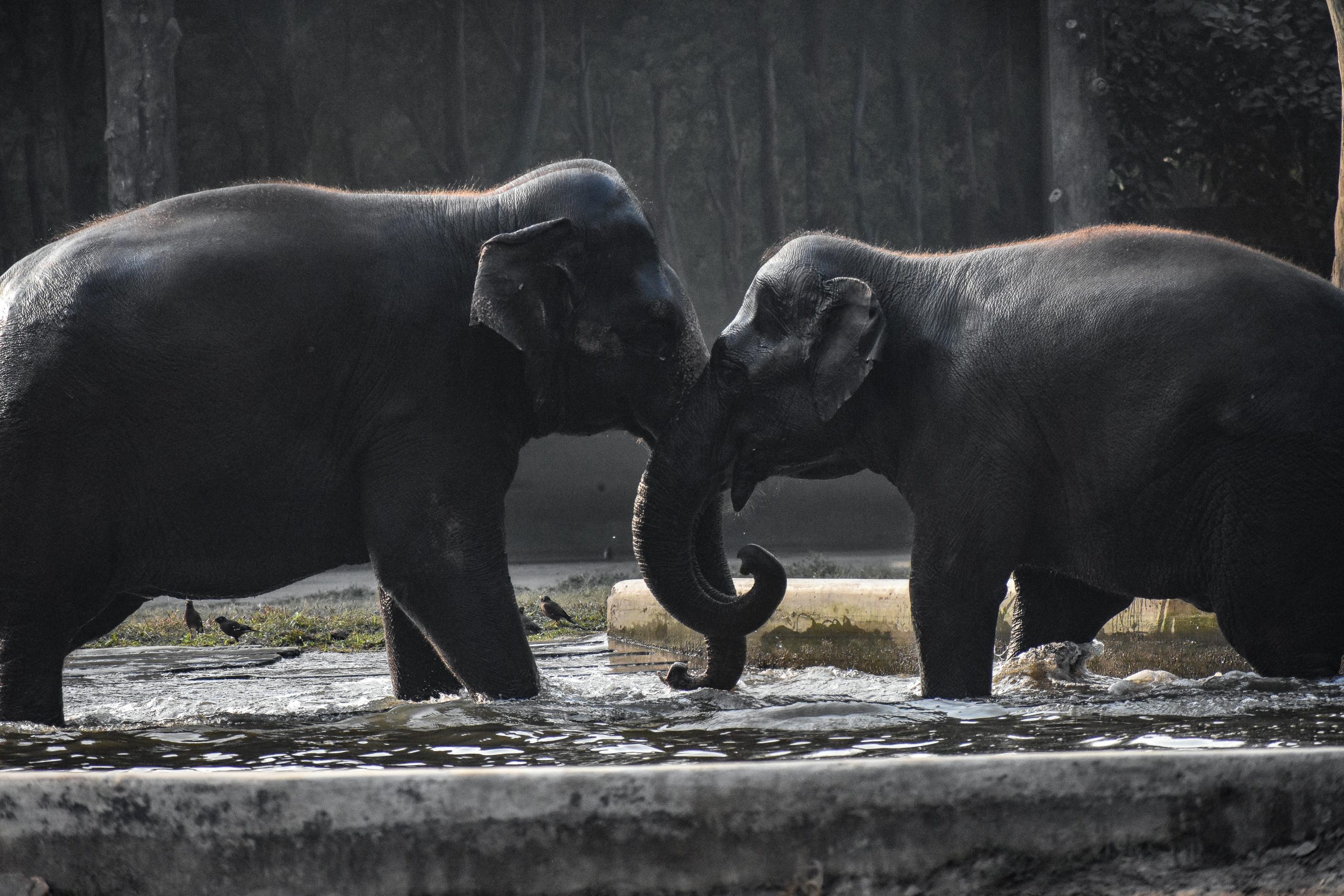
“What sets the Colossal BioVault apart from other biobanking efforts,” says James, “is not just the…scale but the breadth of species and populations we will bank. It is safe to assume that for a species such as the Asian elephant we would be looking at thousands of banked cells from hundreds of individuals.”
Colossal and Dubai also bring money to the biobanking game—a lot of it. The company, founded in 2021, achieved so-called decacorn status by 2025, with a market valuation in excess of $10 billion. A recent Series C funding round brought in an additional $615 million, with $60 million invested by the U.A.E. For now, neither Colossal nor the U.A.E. government will disclose the exact amount being invested in the new biobank, beyond saying it’s a nine-figure sum.
Whatever the amount, it’s only right that that money gets spent. Much of the accelerating extinction rate is driven by human activity—especially habitat destruction and climate disruption; it’s the responsibility of the species doing all of that damage to take as many steps as it can to mitigate it. Biobanks are genetic flash drives—memories of species copied and stored before it’s too late.
“We are losing species at an alarming rate,” said Lamm in a statement. “The world urgently needs…a true back-up plan for life on Earth.”