

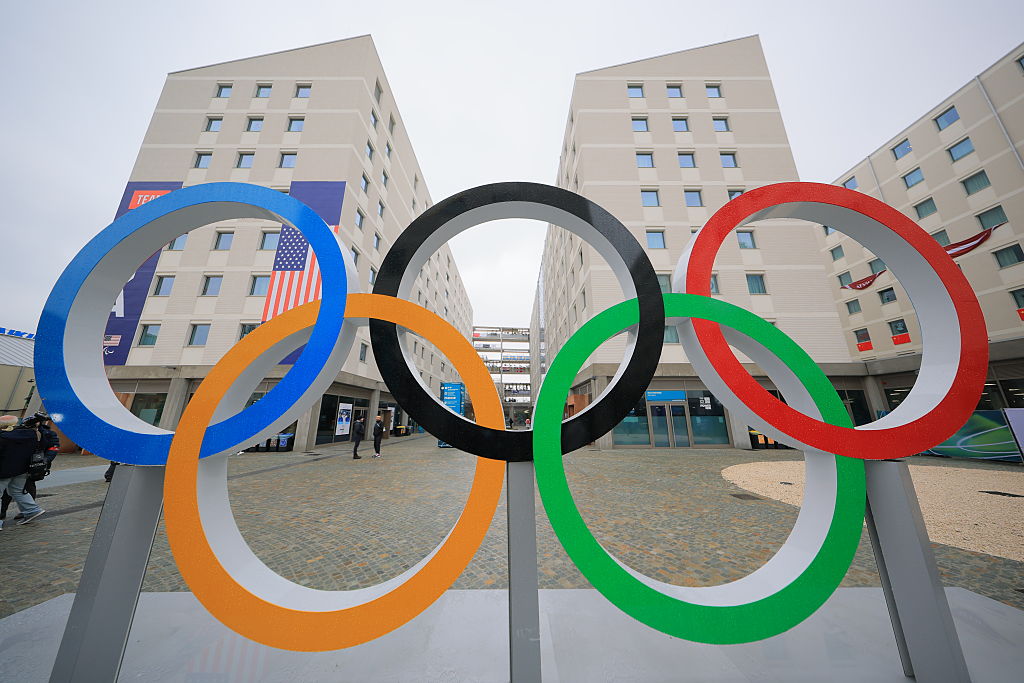
For the 1,559 residents living in the Milan Olympic Village during the 2026 Winter Games, a word to the wise: you could do a lot worse than popping into the complex’s Zona Mentale, or “Mind Zone.” The space, open to all athletes and coaches and team members who call the village their Olympic home, is optimized for relaxation. You can write postcards to friends and family: on paper, not screens. You can color, just like any kindergartner, to give your mind a break from the monumental task at hand: performing in the biggest global sporting event on Earth. You’ve been preparing your whole life for this moment, and may, or may not, get another chance at it. In four years.
[time-brightcove not-tgx=”true”]
Pass the red crayon, please.
In the back of the Mind Zone is a little area called the “conversation pod,” where athletes can convene for heart-to-hearts or confide to a mental health pro. Then there’s the couch, cordoned behind a small barrier for privacy; athletes can use it to catch a nap, or perhaps listen to music on their headphones.
“There’s one athlete who comes every day to read for a couple of hours,” says Gloria Viseras, an IOC staffer—and gymnast for Spain at the 1980 Moscow Games—who oversees the space. The bookworm is from Italy, she says. Bet on her for host country glory.
The Milan Olympic village, spread across six residential buildings on a former rail yard, is smaller than other versions: for one, the Winter Games have fewer athletes than their summer counterparts; and two, with competitions spread out across northern Italy, the populations of each village are thinned. There are also villages in Cortina d’Ampezo, home of women’s alpine skiing, the sliding sports, and curling; Antholz-Anterselva, where the biathlon is being held; Predazzo (nordic combined and ski jumping); Bormio (men’s alpine skiing and ski mountaineering); and Livigno (freestyle skiing, snowboard).
Across all the villages, the beds appear to be more comfortable than those from more recent Olympics. In Milan, where the space will be converted to student housing after the Games—and where the Canadian team erected a moose in front of its residential zone—the recreation area sports a foosball table, where two French women’s ice hockey players were going head-to-head on Tuesday afternoon; a nok hockey table; and a video game area. Olympians can play F1 racing games or pretend to be Carlos Alcaraz in a tennis match. A leaderboard displays the best Olympic video game players: small consolation, perhaps, if they also bite it on the ice.
The Milan village mess hall—where at lunch German and Finnish Olympians sat in groups next to each other, but in their own cliques like freshman and junior cool kids—serves 3,000 eggs and nearly 1,000 pounds of pasta a day. At Tuesday lunch, the menu included cous cous and salmon and sword fish and pizza margherita, of course.
At the Paris Games, the chocolate muffins were the breakout star. Will there be a Milan version of a viral foodie hit? How about the Turtle Sandwich, a bread product available this week: it was advertised as a mix of wheat flour, salt, brewer’s yeast, extra virgin olive oil and sunflower oil? Eh. I wouldn’t put it on the podium.