

Members of Congress who on Monday were granted access to unredacted Justice Department files related to Jeffrey Epstein said they discovered evidence that at least six men had been concealed from public view without clear legal justification, renewing accusations that the Trump Administration had improperly shielded powerful figures from scrutiny.
[time-brightcove not-tgx=”true”]
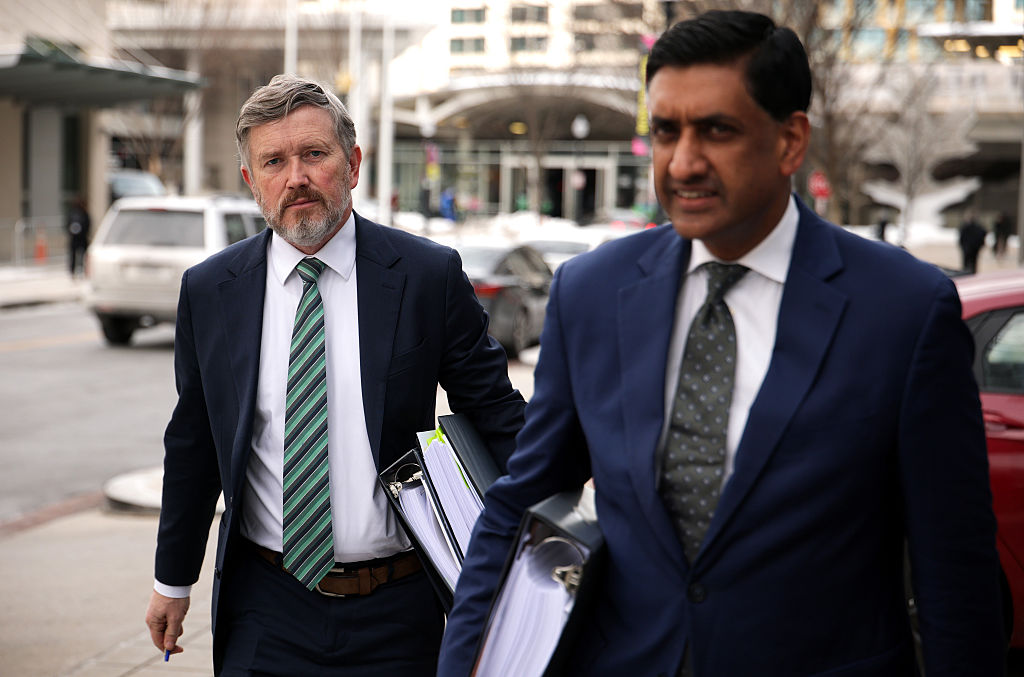
Two of the House lawmakers who reviewed the files—Thomas Massie of Kentucky and Ro Khanna of California—said the redactions appeared to include one “high up” foreign government official and other prominent individuals whose names and photographs were obscured in the versions previously released to the public.
“There are six men, some of them with their photographs, that have been redacted, and there’s no explanation why those people were redacted,” Massie, a Republican, said after spending roughly two hours reviewing the documents inside a secure reading room at a Department of Justice satellite office. He added that at least one of the six men was a U.S. citizen and at least one was foreign, but declined to reveal their names. “I probably should do that from the floor or in a committee hearing,” Massie said.
Their remarks came on the first day that members of Congress were permitted to examine unredacted versions of roughly three million Epstein-related files that the Justice Department has already made public in heavily redacted form. The review follows months of criticism from lawmakers, survivors, and advocates who argued that the Trump Administration had failed to comply with the Epstein Files Transparency Act, which President Donald Trump signed into law in November and requires the Justice Department to release all unclassified records related to Epstein and his associates.
While the act bars redactions made on the basis of “embarrassment, reputational harm, or political sensitivity, including to any government official, public figure, or foreign dignitary,” it allows redactions only in narrow circumstances, such as to protect victims’ identities.
Yet when the DOJ began releasing documents in recent weeks, many were so heavily redacted that they offered little new information.
“These six are just what we found in two hours of a review of the files,” Khanna said. “The broader issue is why so many of the files they’re getting are redacted in the first place.”
“What Americans want to know,” he added, “is who are the rich and powerful people who went to this island? Did they rape underage girls? Did they know that underage girls were being paraded around?”
Under rules set by the Justice Department, lawmakers are allowed to review the files on computers inside a secure Justice Department satellite office reading room, though they must give 24 hours’ notice, cannot bring in electronic devices, and may only take handwritten notes.