

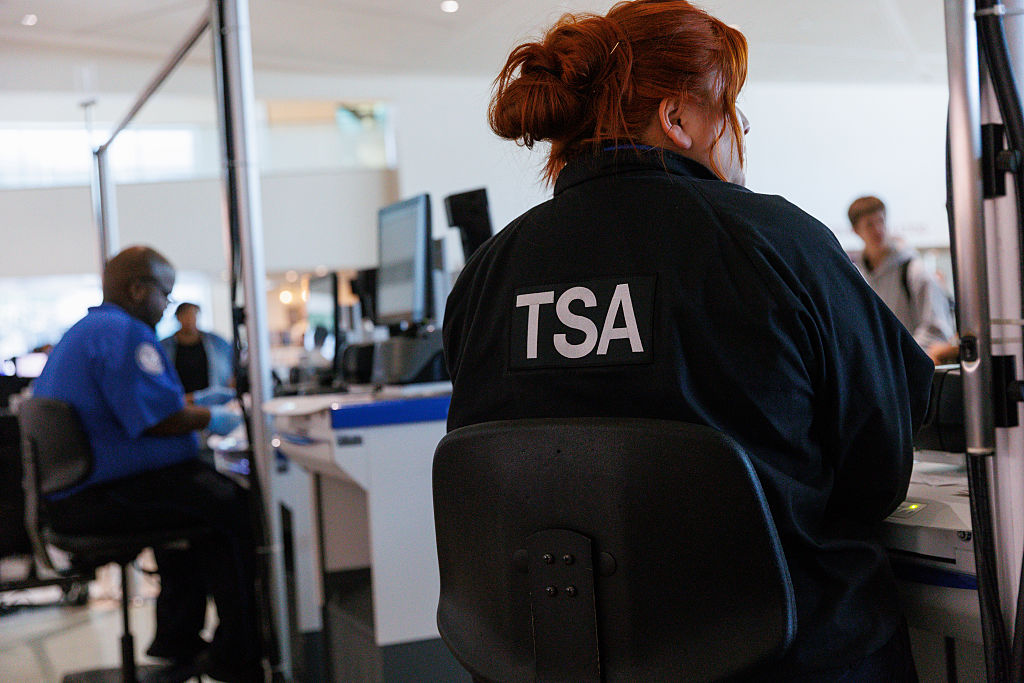
As Congress edges closer to Friday’s funding deadline that could shutter the Department of Homeland Security, lawmakers in both parties are warning that the consequences may be most acutely felt by those traveling.
At a House Appropriations subcommittee hearing on Wednesday, the acting head of the Transportation Security Administration offered a blunt reminder of what a protracted DHS shutdown would mean for air travel: most TSA officers would remain on the job, unpaid, protecting more than 430 commercial airports nationwide.
[time-brightcove not-tgx=”true”]
“A lack of funding and predictability of resourcing will pose significant challenges to our ability to deliver transportation security with the level of excellence we expect and Americans deserve,” said Ha Nguyen McNeill, the acting TSA administrator. “The TSA critical national security mission does not stop during a shutdown.”
The warning came as bipartisan negotiations over funding DHS—and over whether to impose new limits on the Trump Administration’s aggressive immigration enforcement tactics—remained deadlocked. DHS will shut down at midnight Friday unless both chambers of Congress pass the funding bill before then, even as the rest of the government has already been funded through the end of the fiscal year.
Democrats have refused to support a short-term DHS funding extension without new guardrails on Immigration and Customs Enforcement, including limits on the use of masks and stronger warrant requirements, after the killing of two American citizens by federal immigration officers in Minneapolis last month. Republicans, arguing that immigration agencies already have ample funding, have pressed Democrats to back a continuing resolution to buy time for talks.
A shutdown would not immediately grind air travel to a halt. TSA screeners would not miss full paychecks until mid-March, and past shutdowns suggest that major disruptions typically emerge only after weeks without pay, when officers begin calling out sick or leaving for other work. But McNeill, the acting TSA administrator, said the experience of the last prolonged shutdown, which lasted 43 days, underscored how quickly stress on the workforce can translate into problems at airports.
During that shutdown, she said, TSA personnel kept operations running and average wait times within agency standards, but unscheduled absences increased and some airports saw spikes in delays as the weeks dragged on. Some employees, she told lawmakers, reported sleeping in their cars to save on gas, selling blood and plasma, and taking second jobs to make ends meet
“Twelve weeks later, some are just recovering from the financial impact of the 43-day shutdown,” McNeill said. “Many are still reeling from it. We cannot put them through another such experience. It would be unconscionable.”
Airports are not the only pressure point. A shutdown would also affect the Coast Guard, cybersecurity operations, and disaster response, though some of those impacts would be muted initially by leftover funds and special accounts created by last year’s Republican tax and spending package. Immigration agencies, at the center of the political fight, would continue operating largely uninterrupted, buoyed by $75 billion already provided for ICE and Customs and Border Protection.
That reality has complicated Republican arguments that Democrats are effectively defunding immigration enforcement, says Sen. John Fetterman of Pennsylvania, a Democrat who often breaks with his party.
“The Big, Beautiful Bill gave ICE $75 billion,” Fetterman told TIME on Tuesday. “So whatever this vote is, it has nothing to do with defunding ICE—because that’s not true.” Still, he added, the human cost of a shutdown mattered. “It sucks when people don’t get paid,” he said. “I fly 49 days of the year. I think the TSA folks deserve to get paid.”
Read more: Five Takeaways From ICE and CBP Leaders’ First Testimony Before Congress
With negotiations stalled, lawmakers have increasingly turned to highlighting the collateral damage of a shutdown as pressure to force a deal.
Rep. Mark Amodei of Nevada, the Republican chairman of the Homeland Security subcommittee, said Wednesday the “pain here will be felt by the men and women of TSA,” who would once again be asked to work “without a paycheck.” His Democratic counterpart, Rep. Henry Cuellar of Texas, who voted with House Republicans last month to fund DHS, warned that while the word “shutdown” might sound like abstract Washington politics, the reality would be delayed disaster response, weakened cyber defenses and uncertainty for workers “who show up every day to keep this country safe.”
Roughly 95% of TSA’s workforce—about 61,000 employees—would be deemed essential and required to work without pay during a shutdown. While federal law guarantees back pay once funding is restored, the immediate strain can be severe, particularly for lower-paid frontline officers.
McNeill said the stakes for air travel are high—pointing to both the upcoming spring break travel season and the looming FIFA World Cup, which kicks off in June and is expected to bring millions of international visitors to U.S. cities. She warned that budget uncertainty could also delay the deployment of new security technologies and undermine preparations for the tournament. “We do not have the luxury of time,” she said.
House Democrats used Wednesday’s hearing to air broader grievances with the Trump Administration’s immigration policies. Rep. Rosa DeLauro of Connecticut, the ranking member on the House Appropriations Committee, accused Homeland Security Secretary Kristi Noem of avoiding accountability by not showing up to the hearing, which she said was designed to perpetuate “the fiction that Democrats are opposed to funding” agencies like TSA, FEMA, and the Coast Guard “when nothing could be further from the truth.”
But even as the partisan clashes intensified, lawmakers in both parties acknowledged that public tolerance for a DHS shutdown could erode quickly once the effects reach travelers and communities. With members of Congress preparing to leave Washington later this week for an international security conference in Munich, the window for a deal is rapidly closing.