

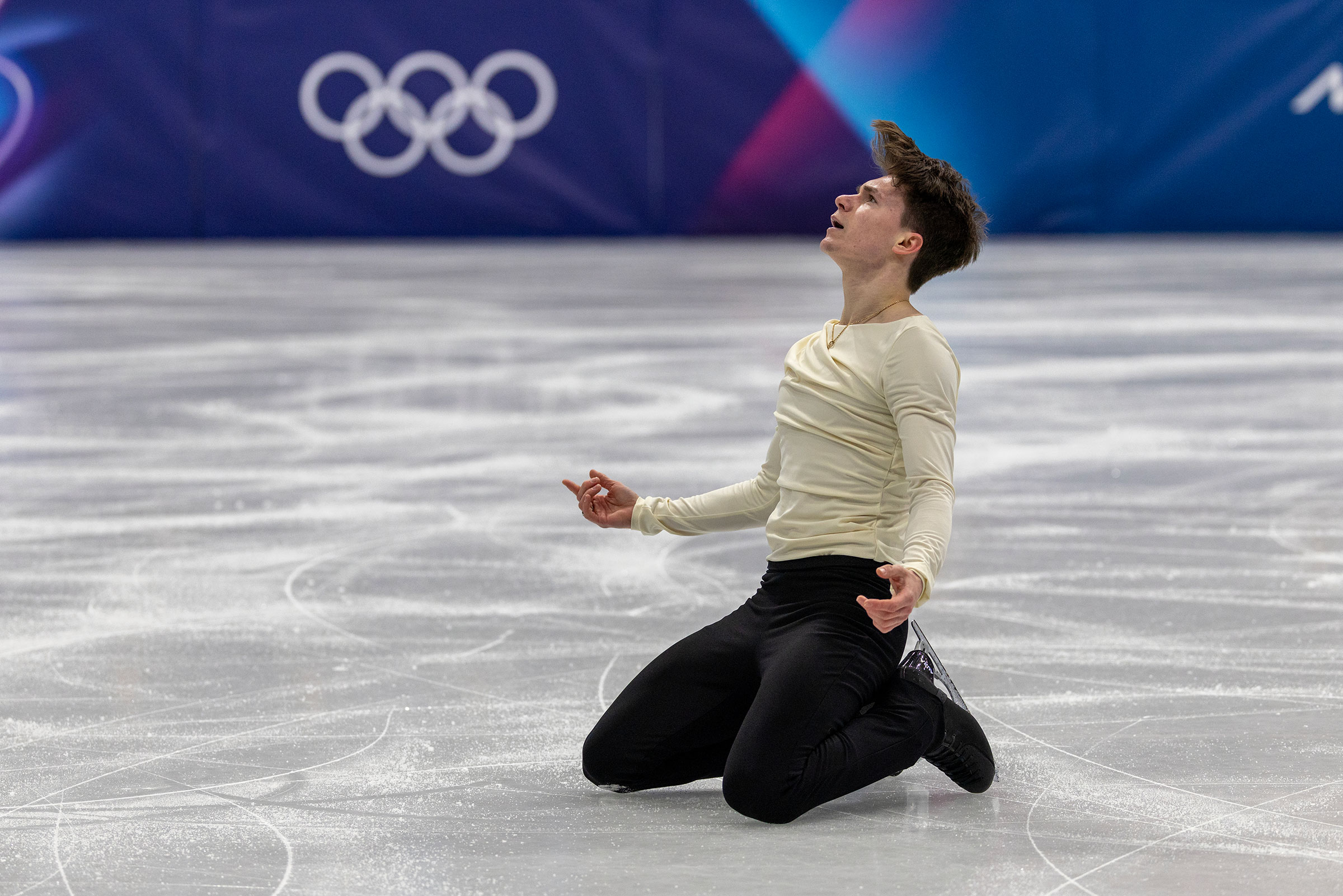
There is always pressure for athletes competing at the Olympics, but for Max Naumov, all of that melted away before he took to the ice for the men’s short program at the Milano Ice Skating Arena on Feb. 10.
“This competition felt totally different,” he told TIME following a practice session two days after the event. “Obviously the stakes are high and it’s the biggest stage, but in all honesty, I felt calm and comfortable.”
[time-brightcove not-tgx=”true”]
Naumov lost his parents, Evgenia Shishkova and Vadim Naumov, in January 2025 when their commercial plane collided with a military helicopter in Washington, D.C., returning home from a skating competition. Shishkova and Naumov were also his coaches, and for months afterward, Naumov wasn’t sure he would compete again.
Making the Olympic team was a family goal, and one of the last conversations Naumov had with his parents involved their plan for making that happen for Milan.
Now that he’s at the Olympics, carrying the weight of those expectations, and the emotional grief that he’s still processing over their deaths, could easily overwhelm him. But they didn’t seem to weigh Naumov down at all during the short program. Instead, he felt a sense of peace—a serenity that he’s been chasing throughout his career but has only felt “in bits and pieces. I never let myself fully dive into that feeling and accepted it,” he says. “But here, I want to go more into that and just relax and enjoy the experience and let my body take over.”
“Emotionally, he’s stronger now than he was at the beginning of last year,” says his coach Vladimir Petrenko, who with his wife Elena were close friends of his parents and stepped in to support Naumov, both on and off the ice, over the past year. “[The grief] is never going to go away of course, but he can handle it, or we can handle it.”
“I was feeling their presence the entire time,” says Naumov, who felt as if his parents were guiding him, like a chess piece on a board, from one element to another. “I was just having conversations with them saying, ‘Man, look what we did. Look what we have accomplished.’ Moments like that really help me connect with them more.”
Shishkova stopped watching her son compete live when he reached the juvenile level, because it made her too anxious. The more important the competition, and the higher he advanced, the farther away she would wait. Initially, she stood outside the arena, then would remain in the hotel. “She loved and cared about me so much that it was really difficult [for her to watch],” he says. “I remember her saying, ‘When you’re out there, I can’t do anything, I can’t say anything, I can’t fix anything. It’s just you out there.’ But I felt her support no matter if she was there or not.”
Naumov finished 14th in the short program, which qualified him to compete in the free program on Feb. 13. After the glare of the arena lights and the adrenalin of the competition dissipated and he was back in his room in the Olympic Village, “I had my moment with them, one on one, and it made me feel really good and happy,” he says. “Once the dust settles and everything clears, you have a moment of clarity, where you can be intentional with what you’re thinking about. They are usually the go-to for me. Obviously it’s a bittersweet moment, but it’s something that helps push me forward and gave me good, positive thoughts for today and the next day. So we’ll try to keep up those vibes.”