

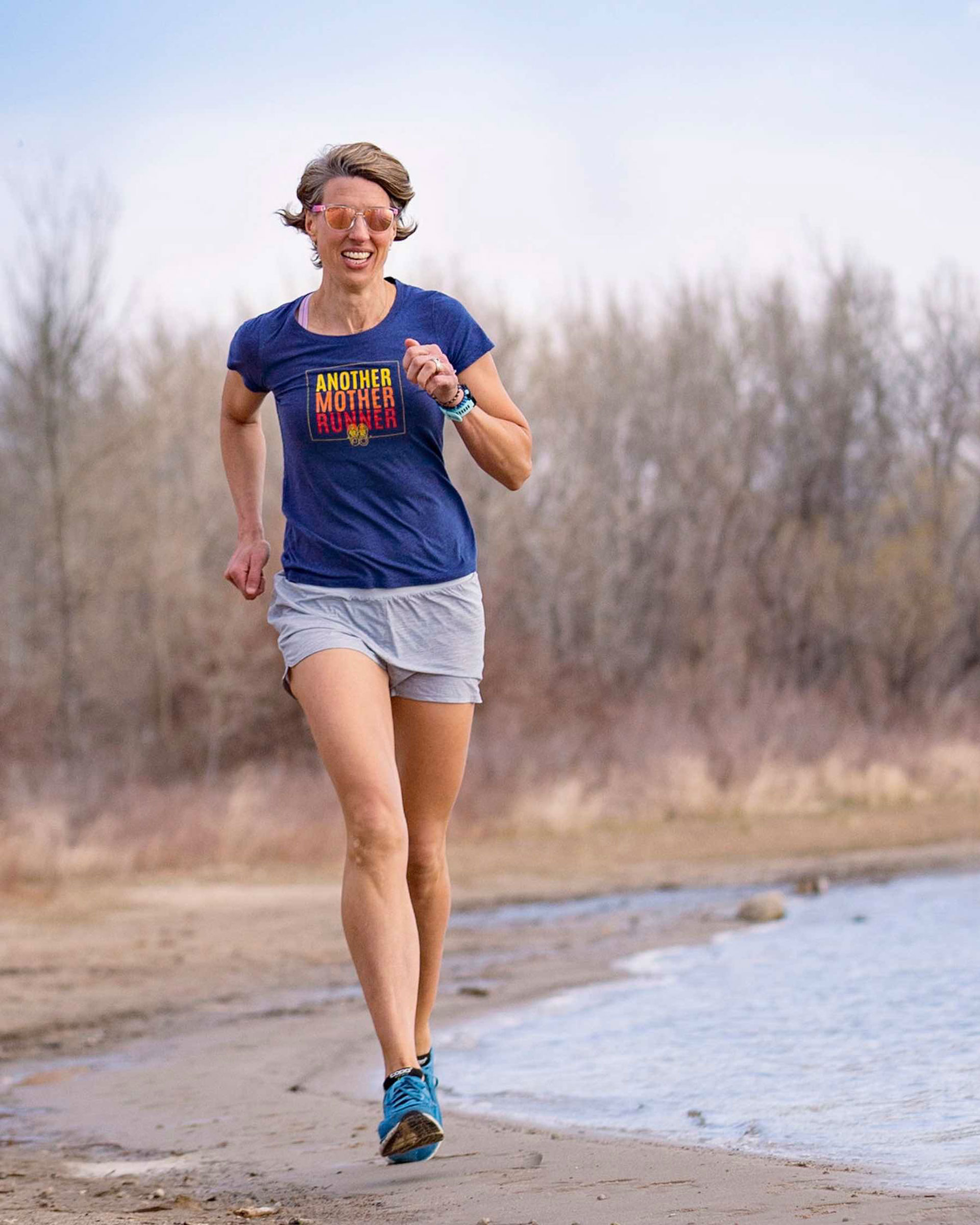
It’s been over a decade since I’ve finished a marathon, but I will never forget those final few miles. My calves turned into dense, heavy cinder blocks. Pain ricocheted through my lower back with every step. My stomach churned with one too many sugary gels. Somewhere around mile 24, my mind yelled: This is enough. I overruled it.
Grit is the stuff of champions—and of the cliches that get printed on T-shirts: Pain is temporary, pride is forever. Rise and grind. Winners never quit; quitters never win.
[time-brightcove not-tgx=”true”]
To be clear: I was far from a running champion. During my 30 years competing as an amateur runner, I never even placed in my age-group, but I thrived on tapping into my gritty side. As my body ached and my mind said no more, I took pride in ignoring that inner voice. With every mile, I was carving my identity as a person who had strength and perseverance, the kind of person you want on your team, which wasn’t the case in my childhood, when I was often picked last in gym class.
Grit works well in short bursts: Finish a marathon, pull an all-nighter, push through a hard season at work, and then downshift the intensity. However, as a long-term strategy for life, grit is unsustainable. It overrides good judgment, normalizes physical pain, and turns self-neglect into a virtue.
Addicted to the runner’s high and hustle
I craved my daily dose of grit. It didn’t require a starting line; an easy four miles around our suburban neighborhood was enough to stoke my endorphins and elevate my high-achieving side, the one whose favorite verb is “strive.” If I wasn’t sweating by 7 a.m., I knew I’d feel unmoored and slightly depressed for the rest of the day.
I didn’t know how to downshift, and my body paid the price. As the miles accumulated, so did the injuries: stress fractures, strained hamstrings, knee and hip pain that resurfaced frequently. While I was (mostly) diligent about physical therapy, I also ran when I should have rested. Sure, my knee might swell for a day or so afterwards, but swelling was temporary. My identity was not.
I stopped running in 2020. The transition was brutal. “Runners pride themselves on the fact that not many people do it. And that it’s the hardest, most pure sport: You’re not hiding behind equipment or a team,” says Dr. Kim Dawson, a sports psychologist who works with amateurs to Olympic-level runners. “If it’s the purest thing in your life, it’s also going to be the hardest thing to leave.”
Three years prior to my final run, my trusted orthopedist, upon examining a stubborn hamstring situation that had lingered for nearly a year, gently suggested that I, “consider not running anymore.” It wasn’t a mandate, but it was enough of a nudge to start reevaluating my relationship with the sport. For somebody who prided herself on toughness, I didn’t have the courage to make that call on my own.
Trying to outsmart physical limits
During the transition, I entered a race, a swim/run event that totaled about 13 miles of running. The runs were broken up into short segments, so I thought I found a way to cheat the system and avoid making hard decisions. I gritted my way through those miles, but my damaged hamstring roared back in protest.
This time, sheer effort wasn’t going to save me. Patience, an intentional slowdown, self-compassion and reflection were, but I hadn’t yet developed those tools. I worked on them as I weaned myself off running with slow, short run/walks, covering distances that used to be the warm-up part of my run.
Time, especially in the second half of life, loosens your grip and offers perspective. Things that used to feel so urgent and non-negotiable (being disciplined, heeding early alarms, ignoring my body’s cues) now have a patina over them. After years of reinforcing my self-worth on pavement, I can see how terrified I was to lose that doorway to strength, control, and value.
As I slowed down and dissected what grit meant to me, I realized its ingredients were more sustainable and accessible than I believed: discipline, self-belief, resilience, passion. Running helped me build those qualities, but they didn’t vanish when I stopped.
Finding new ways to be active and strive
I still get up early. I still feel best when I move my body. I still light up when I’m working towards a big athletic goal, like a century bike ride or an epic day hike.
As I swim, ride my bike, and hike, I no longer equate grit with worth. But I’m still practicing the art of slowing down, of choosing what’s sustainable over what’s punishing. I suspect I’ll be working on that for decades. That said, I’m much more receptive to my inner voice that tells me when I’ve gone too far.
I listen to that voice, knowing that it’s wisdom, not weakness, that tells me to walk.