

As a Coloradan who grew up skiing, I am alarmed at this year’s lack of snow. But more alarming to me than the missing powder days is the lack of water that will flow this spring.
Snowpack in the mountains provides tap water for millions downstream. That water is also the key ingredient for salads and steak dinners around the country. Melting snow feeds creeks and tributaries that eventually connect with the Colorado River, which flows 1,450 miles through seven states, supporting nearly 40 million people, over 4 million acres of farmland, and an estimated $1.4 trillion in economic activity. The river fills sprinklers and faucets from Denver to San Diego and every other major southwest city, town, farm field, and feed lot in between, yet few realize how much their burgers and baths depend on this one drying river.
[time-brightcove not-tgx=”true”]
If state leaders took the time to listen to the actual river, saw it as something more than just plumbing, and worked together pulling paddles and oars, they might find some answers. Colorado River negotiators must face their differences not in a conference room, but on the river’s shores.
A brief history of the Colorado River and water rights
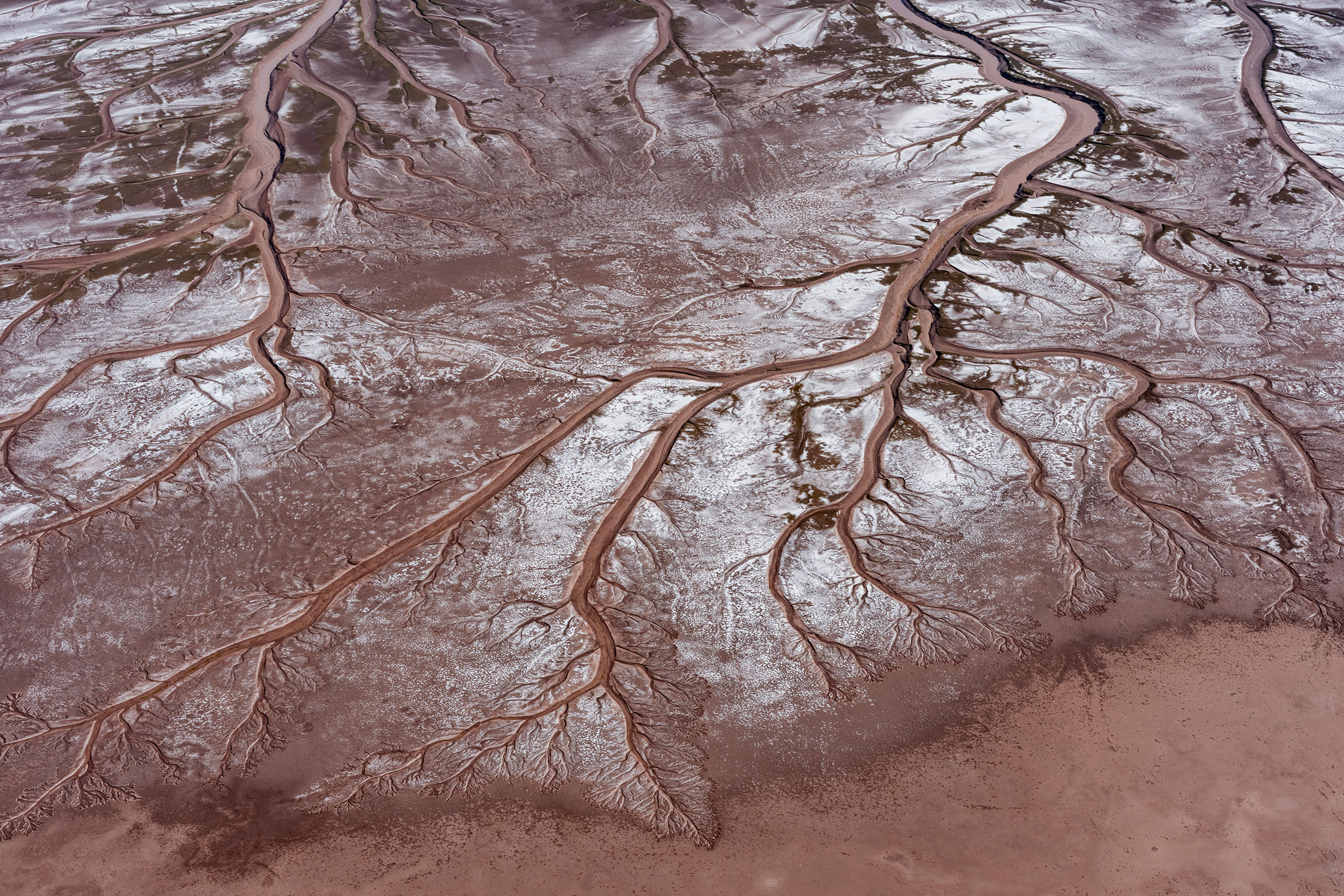
The Colorado River delta in Mexico just south of Yuma, Arizona, was once the largest desert estuary in North America, boasting so many migratory birds that the sky was often blocked by blankets of wings. Today, it’s a cracked-earth wasteland, more of a river cemetery than an oasis. The river does not reach the sea anymore. It did for six million years, but ran dry sometime in the late 1990s.
Fifteen years ago, I traveled the entire Colorado River, by boat but much of it on foot, on a source-to-sea journey for National Geographic. When I reached the delta, the river withered and died. I traveled the last 90 miles on foot across sand and dust. There, I learned for the first time that, thanks to the outdated Colorado River Compact, the century-old management plan negotiated during wetter times with less hydrologic data, we have allocated more water than the river actually supplies.
More simply put, we have too many straws in the drink. And in the last two and half decades, a mega drought and a changing climate have cut about 20% of that flow.
As a result, the system is veering toward catastrophe. Two of America’s largest reservoirs, Lake Powell and Lake Mead, which bookend the Grand Canyon, are depleted by over 70%—teetering near “dead pool,” a term used when water levels drop below the level of the dams’ outlets. For years, dead pool was a phrase only used for futuristic alarmist forecasts. Many experts today say it could happen as soon as next year.
This August marks the most important milestone for the Colorado River in more than a century: the expiration of its 2007 management plan. Trouble is, there is no agreement to take its place.
Everyone agrees that severe cuts need to be made, but disputes over where and how much have created gridlock between the Upper Basin mountain states (Colorado, Utah, Wyoming, New Mexico) and the Lower Basin (Nevada, Arizona, California), each group finger-pointing at the other to cut more.
If common ground isn’t found, the federal government will be forced to intervene, which will most definitely trigger a flood of lengthy state litigations, only prolonging and worsening the crisis.
Agriculture is taking the most water from the Colorado River
Water managers have negotiated Band-Aid atop Band-Aid for years. Native communities, who hold paper rights to about 25% of the river’s water, have remained overlooked and waterless. Meanwhile, agriculture, the largest straw in the river, continues to consume over 70% of the river water available for human use. More than half of the water consumed in the Colorado River Basin goes to growing 10 to 15 annual cuttings of alfalfa crops and hay for cattle feed, much of it for international export to Saudi Arabia and China.
Water flows uphill to money, and the proverbial canteen gets kicked downstream.
Last April, I visited America’s second largest constructed reservoir, Lake Powell. Water levels were close to record low at just 28% full. I explored newly visible alcoves, arches and alleyways of Glen Canyon, many of which rival the grandeur of the Grand Canyon.
Sandstone wonders like Cathedral in the Desert that have been underwater for my entire lifetime, are now returning—a silver lining of sorts. Sediment bathtub rings lining the walls remind us of wetter times and our hubris.
At the end of my trip, I met a boat attendant at Bullfrog Marina, who bemoaned the economic challenges of less water: fewer visitors, fewer boat rentals. As I left, she pointed east and said, “We are just waiting for the snowmelt to arrive.”
It never did. The 2025 snowpack proved better than this winter, but produced a runoff that was just half of the 1991–2020 median. Hotter-than-normal spring temperatures created thirsty soils that soaked up most of the snowmelt.
By May of last year, the runoff was so anemic that the creek my family uses to irrigate a grass-hay meadow in central Colorado nearly ran dry. The water commissioner called me in late May, typically high water runoff time, telling me to turn off our ditch. It was a first. Neither of us had ever seen the creek run so low or heard of a “call” on any historic ditch in the region.
When my brother and I shut the headgate, we relocated a brook trout from the ditch back to the creek, confirming the obvious—there wasn’t enough water.
Now, with snowpacks struggling again, like it or not, we are clearly in a basin-wide water crisis. Our outdated water management model is proving that when we ask too much of a limited resource, it disappears.
State leaders need to spend more time on the Colorado River to understand it
Which brings us back to the raft. State leaders and water managers should climb into a raft and keep floating downstream until they figure out how to stretch less water further, and how to fund an infrastructure that sustains it.
They have to because lives, economies and a river depend on it. I bet they would not only reconnect with the river they manage but also negotiate more solutions that share in shortages and curb forage exports than they have by avoiding each other in sterile conference rooms.
Five and half decades ago, two Colorado River nemeses, Floyd Dominy of the Bureau of Reclamation (pro-dam) and David Brower of the Sierra Club (anti-dam), did just that. They took a river trip together down the Grand Canyon. And while they did not come out as friends, they shared drinks on the river’s banks at night, crashed through rapids together, and returned with a respect for each other and a renewed love for the river itself.
Who knows if that trip was key to fewer dams on the river today, but those fierce adversaries shared more river time than our leaders do today.
I have witnessed firsthand that different user groups can collaborate to keep this river running, and even water the delta briefly. Rafters, ranchers, anglers, hydrologists, energy wonks, and government officials have coordinated in the past to keep water in the river.
I know that our state water managers can do the same.
The Bureau of Reclamation is accepting public comments on their draft post-2026 strategies until Mar. 2, 2026.