

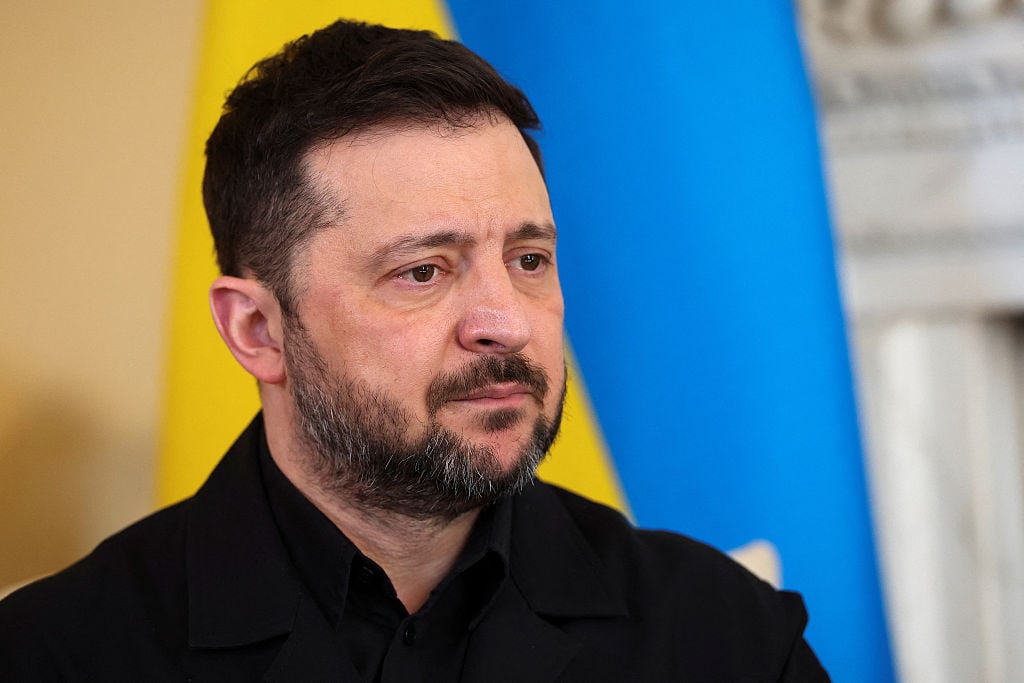
Ukrainian President Volodymyr Zelensky has accused Russia of providing intelligence to Iran to prolong the conflict in the Middle East and deepen global instability.
“The geopolitical situation has become more complicated due to the war against Iran, and unfortunately, this is emboldening Russia,” Zelensky said Tuesday. “Russia continues this war and its destabilization of Europe, supports the Iranian regime with intelligence, and thereby prolongs the war in that region, while also preparing for new conflicts in the coming years.”
The wartime leader’s statement came a day after he publicly declared that Ukraine’s ministry intelligence has “irrefutable evidence” that Moscow is sharing intelligence with Tehran.
“Russia is using its own signals intelligence and electronic intelligence capabilities, as well as part of the data obtained through cooperation with partners in the Middle East,” he claimed. He did not share the evidence pertaining to this.
The Kremlin has yet to respond to this most recent accusation, but last week spokesman Dmitry Peskov refuted claims that Russia is sharing satellite imagery and drone technology with Iran.
He dismissed a report from the Wall Street Journal as “fake news.” Russia’s Foreign Ministry spokesperson Maria Zakharova also rejected the report, insisting “there should be no grounds for such concerns” when asked about the matter during a press conference.
Elsewhere, U.S. intelligence officials have also pointed to coordination between Iran and other nations.
CIA Director John Ratcliffe told Congress last week that Iran has sought intelligence support from Russia and China.
“The Iranians are requesting intelligence assistance from Russia, from China, and from other adversaries of the United States, and whether or not those countries are [assisting] is something we can talk about in the classified portion,” he said.
U.S. President Donald Trump has also suggested Russia may already be providing assistance.
“I think he [Putin] might be helping them a bit, yeah,” Trump told Fox on March 13. “He probably thinks we’re helping Ukraine… They do it, and we do it.” He did not provide evidence pertaining to this.
Zelensky’s most recent remarks come as fighting in various parts of the world intensifies.
Overnight, Ukrainian officials reported that Russian drone and missile strikes hit a number of regions in Ukraine, reportedly killing six people and injuring dozens. A separate aerial attack targeted Lviv, a city in western Ukraine, officials said, resulting in damage to the centuries-old St. Andrew’s Church, a UNESCO World Heritage site.
In the Middle East, meanwhile, despite Trump’s claims that “productive” talks toward a resolution are taking place, Israel and Iran have continued to trade strikes.
With global energy prices soaring as a result of Iran’s chokehold on the flow of oil and liquefied natural gas via the Strait of Hormuz, leaders across the world have urged for de-escalation of the war that is in its 25th day with no clear end in sight.
Ukrainian President Volodymyr Zelensky and U.S. President Donald Trump share a tense exchange in the Oval Office of the White House on Feb. 28, 2025. —Andrew Harnik—Getty Images
Zelensky has drawn comparisons between the Ukraine-Russia war and the one unfolding in the Middle East, arguing Russia and Iran are aligned.
During an address in front of the U.K. parliament last week, he stated the “regimes in Russia and Iran are brothers in hatred and that is why they are brothers in weapons.”
He urged allies to band together and combine resources, specifically when it comes to advanced technology.
Ukraine has faced sustained attacks from Iranian-designed Shahed drones since Russia launched its invasion in 2022. Zelensky has claimed the drones being used by Iran in the current war have Russian components.
With various countries, including the U.K., overseeing defensive measures against Iranian missiles, Ukraine has offered itself as a partner, citing its low-cost drone defense technology as a viable way to intercept Iranian-designed Shahed drones. Zelensky reaffirmed over the weekend that Kyiv is actively working with Gulf countries and offering air defense expertise.
“Tangible results have been achieved from our units in the defense sector, where we provide our expertise and practical support,” he said. “Other countries in the world should contribute their part in strengthening stability.”
His comments came as Ukrainian and U.S. officials met for bilateral meetings in Florida to discuss a framework for ending the war with Russia, which is now in its fourth year.
Security guarantees and proposed land concessions remain key stumbling blocks at the heart of the Russia-Ukraine stalemate.
Prior to the talks held in Florida, Zelensky offered to provide drone assistance to the U.S. amid the Iran war, but was swiftly rejected by Trump, who argued America doesn’t need Ukraine’s help. “We know more about drones than anybody,” he said.
Further signs of tension between Ukraine and U.S. leadership came when Zelensky criticized the Trump Administration’s decision to ease sanctions on Russian oil earlier in the month—a move the U.S. said was made in an effort “to increase the global reach of existing supply” amid the Iran war.
“Revenues give Russia a sense of impunity and the ability to continue the war. That is why pressure must continue and sanctions must work,” Zelensky said Sunday, revisiting his criticism of the decision.