

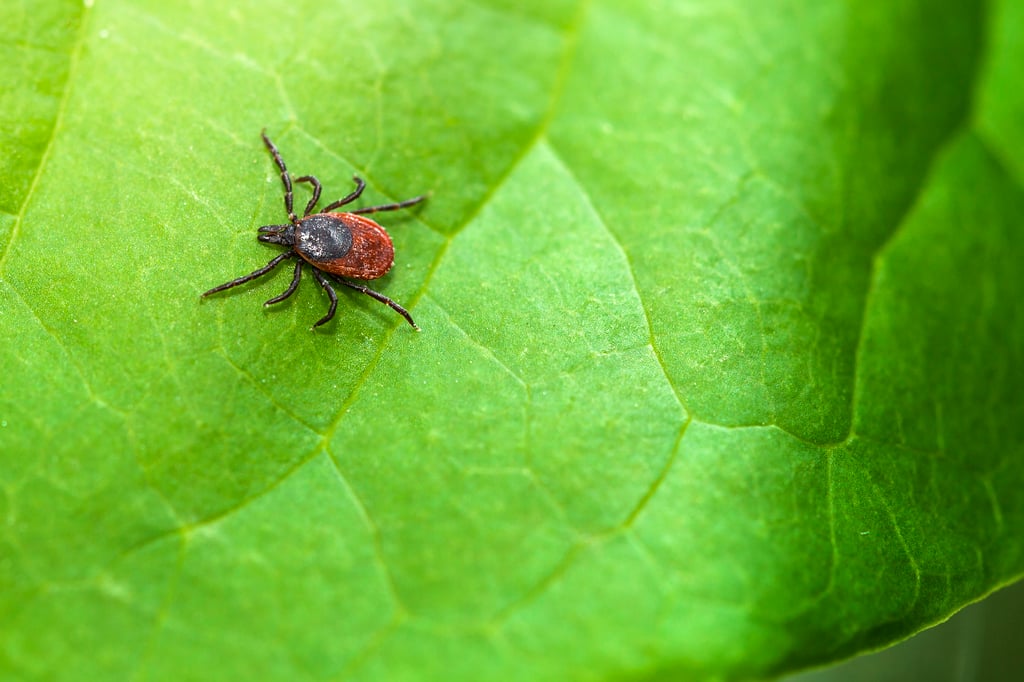
It’s a rite of spring and summer: steeling yourself for the onslaught of tiny but potentially devastating ticks that spread diseases like Lyme and Rocky Mountain spotted fever. This summer could be one of the worst seasons in memory as risk factors collide, experts say.
Climate change is leading to warmer winters—this past winter was one of the warmest on record—which provide more fertile conditions for ticks to breed and hatch. Warmer temperatures in traditionally colder regions of the world also help the arachnids expand their habitat, flourishing where they hadn’t been much of a problem decades ago. The Gulf Coast tick and the Lone Star tick, for example, are now both showing up in more parts of the U.S. “We are certainly seeing more ticks in more places and carrying more and more diseases,” says Joellen Lampman, the tick integrated pest management coordinator at Cornell. Other invasive species, including the Asian Longhorned tick, are also finding new regions to take hold.
These newcomers aren’t replacing or outcompeting existing ones, Lampman says, but adding to the growing number of ticks “without any diminishment in the populations of other native ticks” that are now a problem not just during the summer but most parts of the year. “There’s no time of year when we are completely safe from ticks.”
Warmer temperatures also lead to other ecological changes that favor tick populations, including expanding populations of deer, squirrels, and mice. A few years ago, for example, conditions were ripe for oak trees to produce an abundant crop of acorns, which helped these animals thrive. Ticks depend on these hosts to carry their larvae and babies, which led to an explosive tick season last summer.
That could have spillover effects that raise the risk of tick-borne diseases this year. “My concern is that after a tick-surge based on acorn abundance two years earlier, now we don’t have an abundant food source for the hosts—and if we have less wildlife hosts out there, it’s more likely that it’s a person or a dog that ticks grab onto as they brush by,” says Lampman. “So the year after a surge in tick numbers might put us at more risk, because ticks are less likely to grab onto something else.”
While the past winter was among the warmest, thanks to higher temperatures in the western U.S., the Northeast, a historical hotbed of tick activity, saw higher snowfall. More snow cover means the ground stays insulated from frigid air temperatures, and dormant ticks that take cover in the ground over the winter are better protected from the cold. The end result? More ticks survive to lay eggs in the spring.
So how can you protect yourself from ticks? Here’s what experts suggest.
Why are ticks so dangerous to people?
Ticks themselves aren’t the problem—it’s the diseases they carry. Because ticks feed off of animals like deer and mice, they can pass on bacteria, viruses, and parasites between species. Some of the diseases that pose the biggest health problems for people if they transmit into the bloodstream include viral infections, like Powassan virus, and bacterial infections, including Lyme disease, Rocky Mountain spotted fever, anaplasmosis, and ehrlichiosis.
Read More: What to Know About the New Heart Disease Guidelines
Powassan virus can be fatal if not treated, and Rocky Mountain spotted fever and ehrlichiosis can lead to organ or respiratory failure, which can also be deadly.
Prevention is the best protection
Avoiding wooded and grassy areas that ticks populate is the best way to avoid contact with them—easier said than done with popular summer activities like camping and hiking. If you’re hiking, stick to the middle part of trails and try to avoid venturing into less-trodden areas.
Make it hard for ticks to bite you
The next-best strategy is to expose as little skin as possible for ticks to find. That means wearing long-sleeved shirts, long pants, socks, closed-toed shoes, and something tied around your neck, even if it’s warm. If you’re hiking through the woods, consider taping the opening of boots or shoes to your socks as well. “I don’t know how to get a celebrity to make tucking pants into socks cool,” says Lampman. “But what I tell people is that ticks are starting down at your feet and climbing up; they’re not dropping out of trees. If your pants are untucked, they get underneath your pant leg and aim for the moist, dark parts of the body where they like to feed.” The less skin you expose, the less likely ticks will be to make you their lunch.
Rafal Tokarz, associate professor in the Center for Infection and Immunity at Columbia University Mailman School of Public Health, also recommends wearing light-colored clothing to better spot ticks if they do hitch a ride. “Ticks look like a poppy seed,” he says. “They are so tiny. So if they are on the skin, they are difficult to see, but on light-colored clothing, they are much easier to spot.”
Read More: What Climate Change Means for Summertime Bugs
Spraying your clothes and shoes with permethrin can also help, but remember: avoid spraying your skin. Allow the clothing to fully dry before wearing it. Other repellents that contain DEET or natural plant-based oils can also be effective in deterring ticks.
Seek, shower, and destroy
Tokarz often goes into wooded and grassy areas where ticks are abundant to collect the arachnids for his research, and he says he has never been gotten Lyme disease. One strategy he follows faithfully is checking himself for ticks frequently, both during his ventures and before coming back indoors. “Doing tick checks every so often—checking your pants and sleeves—will go a long way,” he says. “And especially when you get home, give yourself a thorough tick check. Even more preferable, have someone check you for ticks on your back and the back of your legs. Doing that can go a long way to reducing tick-borne diseases.”
Ticks can hide in the hard-to-reach places, including the scalp, behind the knees, in the bellybutton, between the legs, and even in and around the ears. Tokarz says his wife once found a tick in his ear, and he found nymphs on the bottom of his foot, despite the fact that he had tucked his pants into his socks. “They were feeding off the sole of my foot, which I had never seen before,” he says. “I was grossed out but fascinated; it’s not an area I would have thought to look.”
Shower as soon as possible after returning from a hike or other outdoor activity. The water and agitation can help to remove ticks that may have latched on, but isn’t a guarantee. Throwing your clothes into a hot dryer can help remove and kill any ticks that may remain.
Remove ticks very carefully
Tokarz doesn’t recommend consulting Google for tips on how to remove ticks if you do spot one on your skin because some methods listed there, including burning them off, aren’t advisable, safe, or effective.
Read More: Researchers Are Working on At-Home Tests for Lyme Disease
The best way to remove ticks is by using a pair of tweezers and gently tugging at the tick a few times. While the tick won’t want to initially let go, eventually pulling it away from the skin will force it to release its grip. “Give it a few gentle tugs, and don’t rip it out,” says Tokarz. There’s no easy way to tell if you successfully removed the entire tick or left behind some of its mouthparts, but sometimes you can look at the front of the tick once it’s been removed, and if you can spot any protruding parts, it means you’ve successfully removed the mouthparts. The sooner you remove a tick, the better, and the less likely it will be to transmit disease. Experts believe it takes anywhere from 24 to 36 hours for an infected tick to pass on any pathogen it might be carrying. Once you remove the tick, the U.S. Centers for Disease Control and Prevention (CDC) recommends you clean your skin with soap and water, rubbing alcohol, or hand sanitizer.
While the CDC advises getting rid of the tick by flushing it down the toilet, Lampman says she’s anecdotally heard of ticks crawling back out. So she advises placing the tick in a sealed container with alcohol to kill it, and then disposing it. She also recommends putting it in a baggie and freezing it with the date, in case you develop symptoms and want to test the tick for Lyme. Don’t crush the tick with your hands, as you may expose yourself to any pathogens it carries.
How do I know if I might have Lyme disease?
Because ticks are so tiny, especially at the nymph stage, you may not see them and may not know you’ve been bitten. Not all ticks transmit Lyme, but in the Northeast, researchers say up to 50% of adult deer ticks may carry the Lyme-causing bacteria. Take note if you get a fever, chills, headache, or muscle aches in the days after spending time outdoors. Lyme’s symptoms are similar to those for other diseases, and in the majority of cases, you’ll see a red rash that develops where the tick bit you (which may or may not be in the hallmark shape of a bullseye). But nor everyone develops the rash, and the rash might not be obvious, especially if it’s in a place like your scalp.
To make things more confusing, the test for Lyme is a two-step process. To perform it properly, doctors need to conduct these tests in the proper order: a screening test that looks more generally for antibodies the body makes against the Lyme bacteria, and a second that confirms the presence of specific antibodies to the bacteria, says Dr. Martin Backer, associate professor of medicine at NYU Langone Health. But it takes a while for this immune response to activate, so if you’re tested too early, it may lead to a false negative. If doctors only perform the confirmatory test, it could lead to a false positive if someone has previously had Lyme. “Nor every provider is familiar with the specific test for Lyme,” Backer says. “It’s important that it’s done in the right sequence.”
While the test “has gotten better, in a nutshell, it’s the same system that was in place in some form 30 years ago,” says Tokarz. The best way to ensure an accurate diagnosis would be to talk to your health care provider about getting tested properly.
Read More: Stopping GLP-1 Drugs Could Put Your Heart At Risk
Is there a treatment for Lyme disease?
Antibiotics are the best way to treat Lyme. Most doctors will prescribe a two-week course, and the earlier the drugs are started, the more effective they tend to be. Some people develop lingering symptoms of the disease, even after there is no sign of active infection with the Lyme bacteria, and researchers, including Tokarz, are trying to understand why and how that occurs. “There are so many different hypotheses—whether there is some persistent bacteria, some remains of bacteria, something entirely different, or some co-infection with another tick-borne pathogen, or some damage to the immune system from the initial infection—at this point it’s difficult to prove or disprove them,” he says.
Is there a vaccine for Lyme disease?
Not yet. But in March, Pfizer reported encouraging results: its vaccine candidate prevented Lyme disease in 73% of people who received it, compared to those getting placebo, in a trial lasting more than a year. As promising as the results are, however, they did not meet the statistical criteria that were specified in the trial—but the company says the efficacy is enough for them to request approval from regulatory agencies.
For doctors like Backer who treat people with Lyme, it’s very encouraging. “When the tick attaches to a human and gets a meal of blood in someone who is vaccinated, in that blood are antibodies that neutralize the bacteria,” he says. “And 70% protection is a great number. It’s not 95%, but it’s a whole lot better than the 0% that you get from no vaccine.”
Even if it’s approved, the vaccine will likely face some hurdles. It requires four doses: three within a few months of each other, and a final dose a year later. “With the environment regarding vaccines being what they are currently, I see this as a major challenge for people to accept it and actually use it,” says Tokarz. “But it is something, and overall seems like a satisfactory vaccine.”