

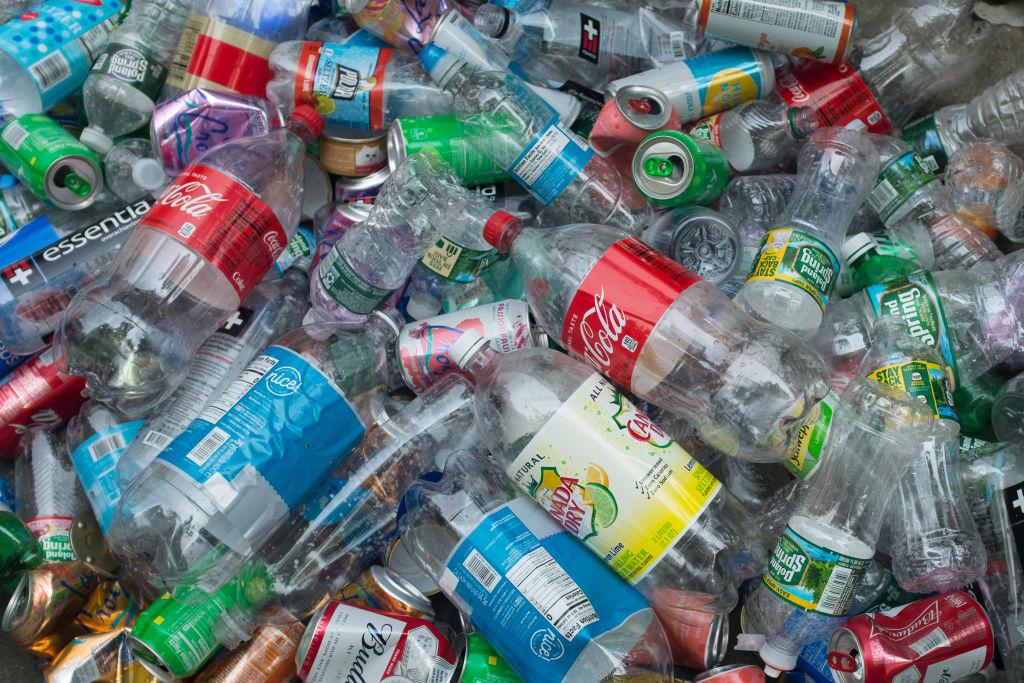
Throwing your plastic bottles in the recycling bin may make you feel good about yourself, or ease your guilt about your climate impact. But recycling plastic will not address the plastic pollution crisis—and it is time we stop pretending as such.
Less than 6% of plastic waste in the United States is recycled. This number tends to surprise people, in part, because it is a hard truth to accept. We all want a magic wand that can effortlessly eliminate the plastic trail of consumerism. Plus, we’ve been misled to believe that sea turtles would stop choking on our plastic waste if we faithfully chucked it into the recycling bin.
[time-brightcove not-tgx=”true”]
That deception was intentional. Powerful fossil fuel and chemical companies—the ones creating the pollution in the first place—knew as early as the 1970s that plastic recycling would never be able to handle the world’s plastic waste. At that time, consumers and policymakers were realizing there were severe environmental consequences to single-use, disposable plastics, and companies were feeling the heat. To prevent their products from being restricted by new laws, companies banded together to plant positive messaging about plastic recycling across our society. In the 1990s, television commercials about recycling felt as prevalent as Beanie Babies.
Industry deception continues today. For instance, when you place your old plastic shopping bags in the drop-off bins at grocery stores, that packaging often still ends up in a landfill. And the triangular “chasing arrows” symbol that everyone associates with recyclability routinely appears on non-recyclable plastic products.
Plastic, which is made from fossil fuels, wasn’t designed to be recycled. Roughly 16,000 chemicals can be found in plastic, many of them purposefully added during the production process to give plastic characteristics like flexibility, strength, color, and resistance to sunlight. Different plastic products contain different combinations of those chemicals, and these varied plastic types must all be sorted and recycled separately.
What’s more, plastic—unlike glass and aluminum—loses its functionality when it’s recycled. A glass bottle or aluminum can may be recycled into another glass bottle or aluminum can over and over again. By contrast, a plastic bottle can only be recycled into another plastic bottle two or three times before it becomes something like carpeting or clothing, which typically ultimately ends up in a landfill or incinerator, polluting our air, soil, and water. In this way, recycling doesn’t sustainably prevent plastic waste from ending up in the environment—it just delays it.
Now, from New York to California, state attorneys general are filing lawsuits against plastic producers like PepsiCo and ExxonMobil not just for their pollution but also their recyclability claims.
While the plastics industry was pulling the wool over our eyes, it was also exponentially increasing plastic production. The result: Plastic waste in the United States rose from 13.6 billion pounds in 1980 to 71.4 billion pounds in 2018—a whopping 263% increase.
In less than a century, companies polluted the planet with so much plastic that it has reached every corner of the globe, even the most unexpected places: arctic sea ice, the Mariana Trench, remote mountains, rain in our national parks, and, perhaps most alarmingly, throughout our bodies.
Microplastics—the small bits of plastic that are constantly shedding off plastic products—have been found in nearly every human organ system, including the lungs, blood, brain, testicles, placenta, and breast milk.
Researchers and medical professionals are publishing vital new research about what our plastic diet is doing to our bodies. Of those 16,000 chemicals found in plastic mentioned earlier, 4,200 are known to be harmful to human health or the environment. Plastic and its chemicals are believed to be associated with cancer, heart attacks, hormone disruption and more.
A study published earlier this year in The Lancet found that plastic is responsible for at least $1.5 trillion a year in health-related damages worldwide. Those damages begin at the very start of plastic’s life cycle, when fossil fuels are extracted from the Earth, and persist during every subsequent stage of their journey from store shelves, to recycling centers, to their inevitable disposal.
So what can we do? If we can’t recycle our way out of this mess, and plastic’s environmental and human health harms begin from its very conception anyway, how do we reverse the plastic pollution crisis?
First, companies need to stop producing so much plastic and shift to reusable and refillable systems. If reducing packaging or using reusable packaging is not possible, companies should at least shift to paper, cardboard, glass, or metal. These can be made from recycled material and actually get recycled again. Companies are not going to do this on their own, which is why policymakers—the officials we elected to protect us—need to require them to do so.
It’s the only way to ensure people are prioritized over plastic.