

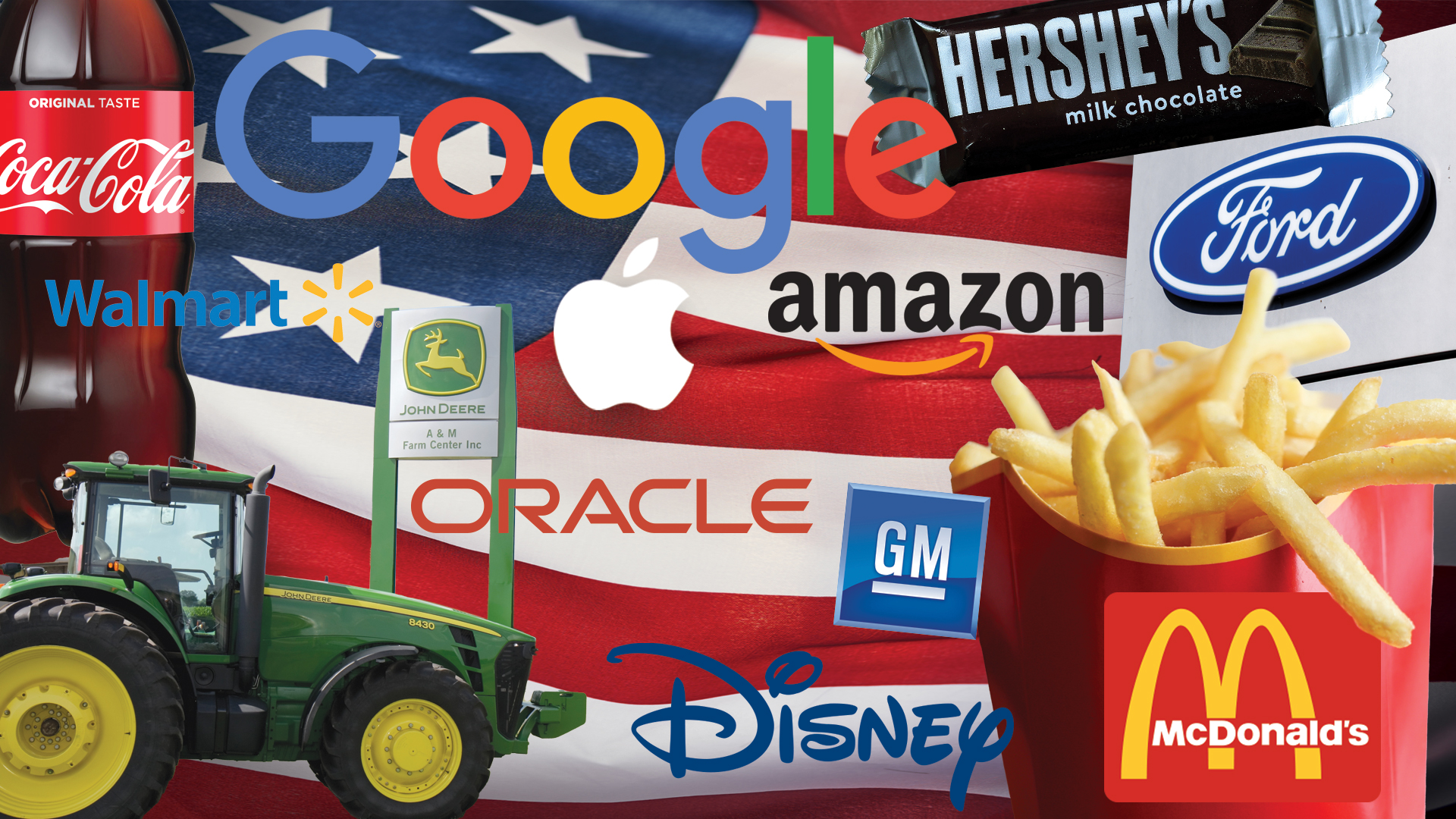
In 2026, America celebrates its 250th birthday. Within those years, the country has built a legacy as an incubator of globally relevant companies and brands, and an economic powerhouse. To paint a picture of that business legacy, TIME and Statista conducted a nationally representative survey of U.S. residents to rank the 250 American companies that are not only commercially successful, but have played a vital role in shaping culture and society. The list shows a comprehensive landscape of companies founded just 30 years after the country itself (Colgate-Palmolive in 1806) as well as 21st century entrants (OpenAI in 2015), many of which are already internationally recognized.
[time-brightcove not-tgx=”true”]
Methodology: How TIME and Statista Determined America’s Most Iconic Companies
“For a long time, there had been a kind of fascination with the culture and the things that happened here in America, because America itself was kind of branded as this special place. There was a story around immigrants and the welcoming of people to this beautiful country to realize their dreams,” says Americus Reed, a professor of marketing at University of Pennsylvania’s Wharton School. “The mechanics of this is that when you invite the brightest and the best to come to one place, you get this bastion of creativity. You get innovation. And you can see that being infused in the brands, the products, services, organizations that start here.”
Ford Motor Company, which tops the list, has long aligned its brand with the American identity. Known for making cars accessible to the masses by bringing down production costs through the assembly line and distributing it across the U.S. via a locally-based dealer-franchise system, Ford transformed the manufacturing process and also transportation for the average American, reshaping the development of cities and suburbs. Now, it’s being put in a position to redefine the future of mobility in the country, as it experiments with self-driving cars, and works to bring down prices on its electric vehicles. “Just as my great-grandfather put the world on wheels to give people the freedom of movement, our approach to the modern era is rooted in that same spirit. Innovation is not just about building batteries or technology for its own sake; it is about making people’s lives better,” says Bill Ford, Ford’s Executive Chair. “We are leveraging our position as the largest hourly auto employer in the U.S. to ensure that the future of transportation is built by American workers for everyday American families.”
Companies like McDonald’s (no. 6), which built domestic loyalty by meeting the lifestyle demands of diners by offering fast, cheap and standardized dining experiences, have embodied the American identity so well that it’s viewed abroad as a cultural embassy—an export of American reliability, consistency, efficiency and accessibility. It’s not only a metaphor, but in fact, Austria in 2019 made it possible for Americans to call the U.S. consulate from any McDonald’s location in the country. Over the decades, McDonald’s international locations have evolved from outposts of American values to destinations in and of themselves, featuring specialty regional menus and architecture integrating local design quirks—recently documented in detail by photographer Gary He in the picture book McAtlas. “We’re proud to be a brand that brings people together. While our roots are American, it’s our local franchisees, suppliers, and crew members who make McDonald’s a trusted neighbor in thousands of communities worldwide every day,” says McDonald’s Global Chief Impact Officer Jon Banner.
Of course, McDonald’s is not the only company to offer a slice of American culture to the world. The U.S. media and entertainment industry is the largest in the world, according to the International Trade Administration, and Disney (no. 11) is one of the biggest defining names in the business, combining art and technology to pioneer modern animation. The centenarian company, renowned for exporting American storytelling, has transformed into a media and experiential giant, capturing and reflecting the country’s traditions and ideals of optimism, ambition, and invention across the eras, and influencing popular culture globally. “For over a century, Disney has been woven into the American story, with beloved characters and timeless tales that have brought magic, joy and wonder to generations,” says Bob Iger, CEO of The Walt Disney Company. “Walt Disney’s enduring vision for this great company remains our inspiration, shaping the creativity, curiosity and innovation that fuel our storytelling today. The dreams Walt envisioned for Disney continue to grow, taking us into the future and pushing the boundaries of what is possible for generations to come.”
As times change and companies globalize, the challenge many legacy brands face is having to strike a balance between staying true to their American roots and adapting to the shifting needs of the market. Many American companies moved their manufacturing overseas in the late 1900s to save costs, although in the last 10 years, some companies have started to bring production back stateside, and tariffs imposed by the Trump administration are encouraging a wave of big companies to reinvest in domestic manufacturing. John Deere (no. 55), one of the oldest companies on the list, has maintained a manufacturing stronghold in America—more than 75% of all products sold in the U.S. are assembled at domestic manufacturing facilities, where local farmers can come in and provide feedback.
“Since 1837 when we got our start, we’ve been defined by one mission: really supporting the people who provide all the food, fuel, fiber and infrastructure that we all rely on, and that’s farmers and contractors across America,” says Mara Downing, Vice President of global brand management and corporate communications at John Deere. “We’re really proud to have helped build America over the past two centuries, and we look forward to continuing to invest in our presence in America.” In early 2025, John Deere announced that it would soon introduce an electric lineup of agriculture tractors.
Although what it means to be American is different today than it was two centuries ago, and globalization opens domestic brands to tough foreign competition from China, which has invested heavily in manufacturing infrastructure and talent development, the country’s resilient entrepreneurial spirit fosters new generations of trailblazer companies like Apple (no. 2) and Google (no. 9), which have democratized once-complex technologies, while racing toward the next wave of digital breakthroughs.
See the full list of America’s most iconic companies below.