

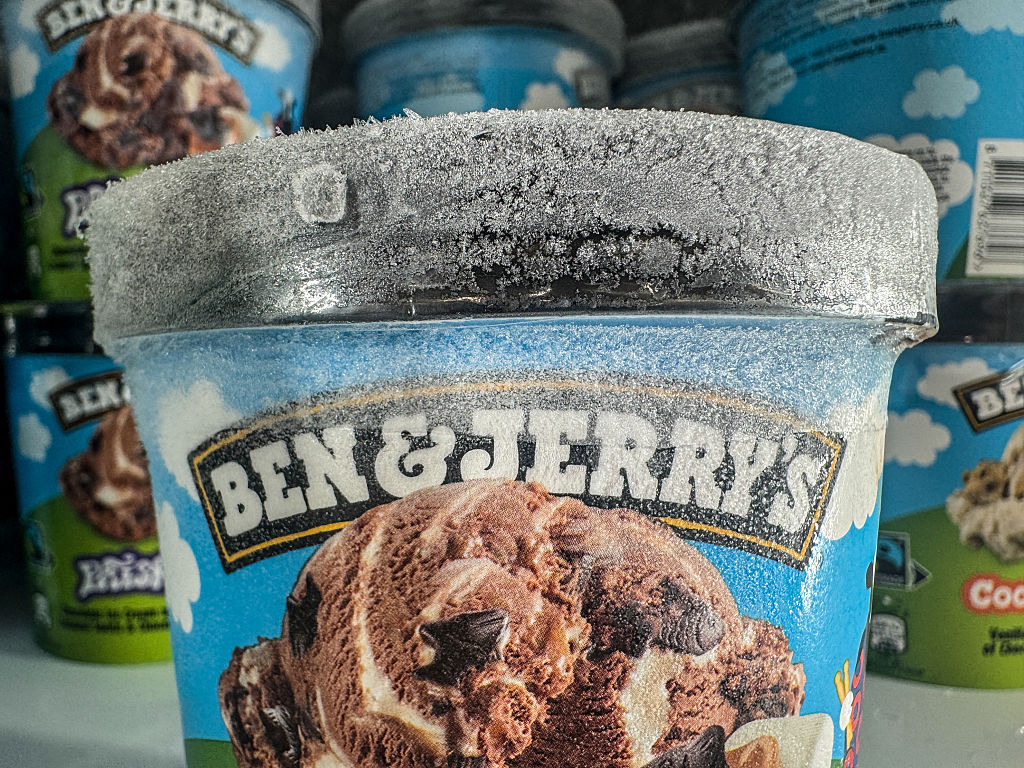
Late last year, the company I co-founded, Ben & Jerry’s, became part of a new ice cream conglomerate, The Magnum Ice Cream Company, following the demerger of Unilever’s ice cream business. Almost immediately, Magnum started limiting the power of Ben & Jerry’s independent board, which was created to protect our company’s social mission. The impact goes to the heart of what Ben & Jerry’s is, and what it was built to be. Our brand cannot be separated from its values.
[time-brightcove not-tgx=”true”]
On Jan. 11, Ben & Jerry’s independent board members filed a lawsuit accusing Magnum of blocking the appointment of former executive Chris Miller as a director. The filing alleges that Magnum initially supported the nomination, then reversed course after introducing new board requirements in December—requirements that forced out the board’s chair and two other members. The lawsuit escalates a long-running dispute over who ultimately controls Ben & Jerry’s voice and values.
That dispute centers on a fundamental question: Does Ben & Jerry’s have the right, enshrined in a unique acquisition agreement, to manage its social mission and take public stances independently that may conflict with commercial priorities?
The answer matters because this conflict is not just about board seats or corporate process. It is about who decides what Ben & Jerry’s stands for—from the composition of its independent board, to its public advocacy, and even to which flavors of ice cream it can sell.
For instance, back in Oct. 2025, Ben & Jerry’s independent board backed creating an ice cream in support of a ceasefire in Gaza. Ben & Jerry’s management, under then owner Unilever, said no.
When Jerry and I started Ben & Jerry’s in a renovated gas station in Burlington, Vt. in 1978, we weren’t trying to build a famous ice cream brand. We were trying to build a business based on a simple belief: that a company could equally value great ice cream, community benefit, and profitability. From the beginning, the social mission (using the power of business to improve the quality of life in our communities) and the commercial mission (making a profit) were not separate tracks. They were two rails on the same track.
We believe the power of business lies in integrating social benefit into strategic and day-to-day decisions: how products are made, how workers are treated, how resources are used, and how influence is exercised.
That means asking hard questions. How do we purchase ingredients in ways that benefit smallholder farmers and Indigenous people rather than exploit them? How do we make environmental and energy decisions that minimize harm? How do we conduct our finances in ways that narrow, rather than widen, the gap between rich and poor?
The most powerful tool a business has is its voice. When businesses speak, people listen. The media listen. Politicians listen. That’s why, when Ben & Jerry’s speaks out, we are actively campaigning to change government policy. And changing government policy is the key. Without it, you’re just fiddling around the edges.
Using the power of business to influence government policy is standard practice in corporate America. Companies spend billions on lobbying and political donations to protect their interests. The difference is that many organizations do so covertly to maximize profits. At Ben & Jerry’s, we’ve always done it overtly to fight injustice.
That belief guided our decisions—and it’s also why, when Unilever offered to buy Ben & Jerry’s in 2000, I didn’t want to sell. Not because of Unilever specifically, but because any giant corporation tends to default to the same logic: profits come first, everything else comes second.
I worried that if Ben & Jerry’s were absorbed by a multinational, the social mission would be the first thing pushed aside.
I couldn’t stop the sale; the shareholders voted for it. But I fought like hell to protect the company. That’s why, during negotiations, we created something unprecedented in corporate America: an independent board with real, legally binding authority over Ben & Jerry’s social mission, brand integrity, and equity commitments. For more than two decades, that structure worked. Now, the limits of that independence are being tested.
For decades, our stands on racial justice, LGBTQ equality, democracy, environmental protection, peace, workers’ rights, and international human rights have strengthened the brand. We didn’t take these positions because they were fashionable or profitable. We took them because they were right.
And consumers understand that difference.
I didn’t fight to create an independent board so it could rubber-stamp a parent company’s decisions. I fought for it because I knew Ben & Jerry’s needed a system to defend its heart.
Now we believe that Magnum is trying to strip that board of its independence and power. Jerry and I have concluded that the values of Ben & Jerry’s will die under Magnum’s ownership. That’s why we launched the Free Ben and Jerry’s campaign to restore the company’s independence.
When Jerry and I opened our first shop, we weren’t just learning how to make ice cream. We were figuring out a way to prove that you can make money and use the power of business to fight for justice.
And that’s why I’ll say it plainly: Ben & Jerry’s can’t survive without its heart.