

Warning: This post contains spoilers for “Wuthering Heights.“
If you go into Emerald Fennell’s “Wuthering Heights” expecting a faithful page-to-screen adaptation of Emily Brontë’s classic 1847 gothic romance novel, you may come away from the film, now in theaters, feeling a mix of confusion, shock, and, depending on your sensibilities, maybe even a little disgust.
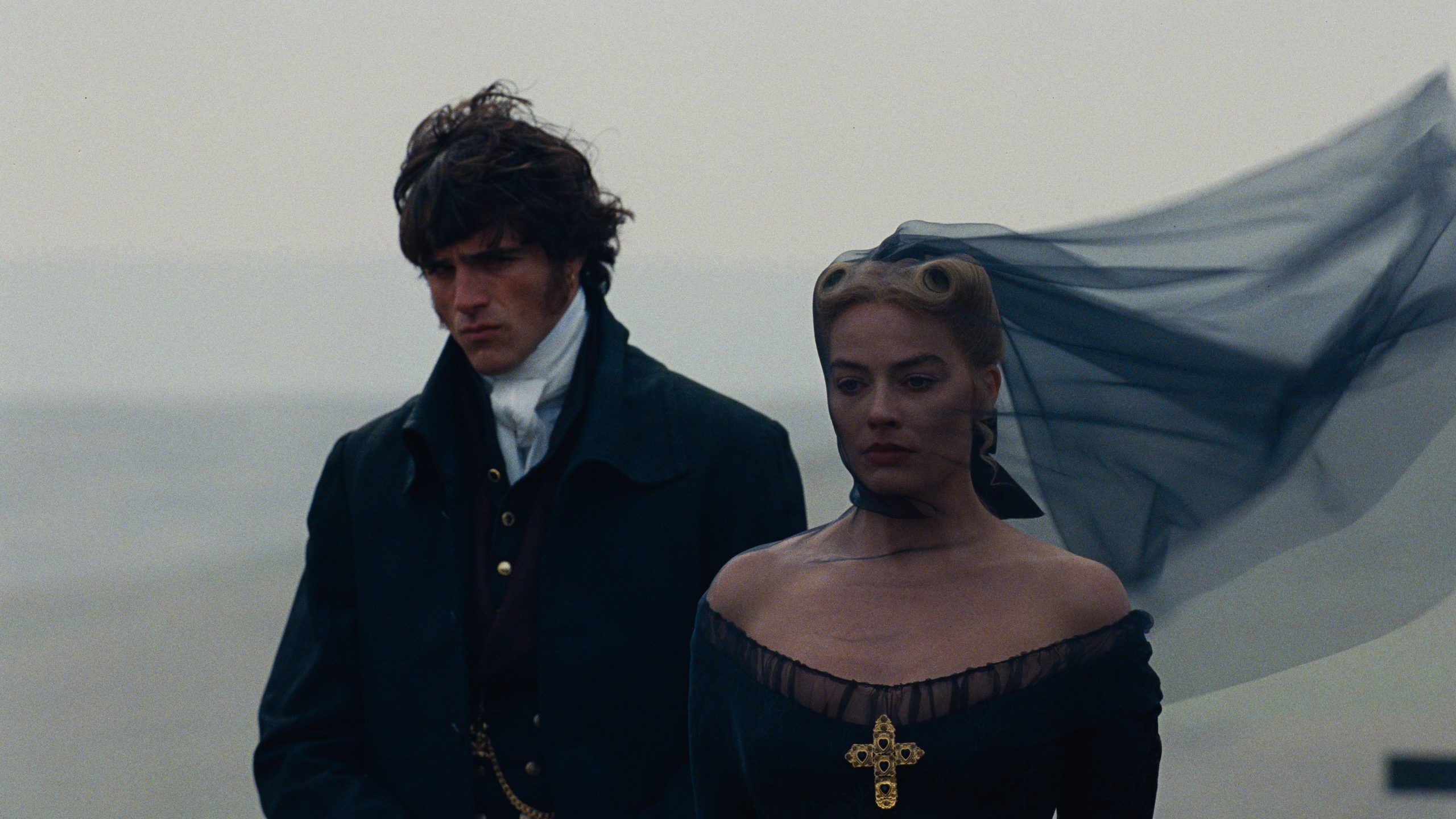
Fennell’s maximalist bodice-ripper instead embodies the story the Promising Young Woman and Saltburn filmmaker felt she experienced when she first read Wuthering Heights at age 14. Starring Margot Robbie and Jacob Elordi as Catherine Earnshaw and Heathcliff, the star-crossed lovers/tormenters at the center of Brontë’s timeless tale of all-consuming yearning turned monstrously vengeful obsession, Fennell’s “Wuthering Heights” (quotation marks intentional) is a conspicuously loose interpretation of its source material.
[time-brightcove not-tgx=”true”]
“I wanted to make something that made me feel like I felt when I first read it, which means that it’s an emotional response to something. It’s, like, primal, sexual,” Fennell told the BBC. “I know that if somebody else made it, I’d be furious. It’s very personal material for everyone. It’s very illicit. The way we relate to the characters is very private, I think.”
Knowing this was Fennell’s approach may make it easier to digest the significant liberties she took with the book, including casting age-inappropriate—and in Heathcliff’s case, arguably race-inappropriate—leads, eliminating Brontë’s use of unreliable narrators to relay the events of the story, and cutting the entire second half of the novel in order to bypass the suffering inflicted on the next generation of characters. These choices allow Fennell to indulge in a raunchy, BDSM-infused version of the narrative that centers on the tumultuous love-hate relationship between Cathy and Heathcliff. They also raise questions surrounding Fennell’s framing of the true villain of the windswept English drama.
In Brontë’s Wuthering Heights, Heathcliff is the overt antagonist of the story. Described in the novel as black-haired, black-eyed, and dark-skinned—characterizations that, while racially ambiguous, are widely interpreted by scholars as intended to convey otherness—Heathcliff is introduced as an orphan of unknown origins who is adopted into the Earnshaw family by Catherine’s father and raised alongside her. Following Mr. Earnshaw’s death, Heathcliff is forced to endure extreme physical and psychological abuse at the hands of Cathy’s alcoholic, gambling degenerate of an older brother, Hindley (a role that is subsumed by Martin Clunes’ Mr. Earnshaw in Fennell’s film).
Heathcliff flees Wuthering Heights as a teenager, in the wake of overhearing Catherine’s apparent rejection of him and announcement that she has accepted a proposal from the wealthy, fair-haired, and fair-skinned heir to the neighboring estate of Thrushcross Grange, Edgar Linton (played in the movie by English, Scottish, and Pakistani actor Shazad Latif). Heathcliff then returns, years later and bearing a mysterious windfall of newfound wealth, with the express goal of inflicting as much cruelty and pain as possible on the remaining members of the Earnshaw and Linton families. He behaves abominably, manipulating Edgar’s naive sister Isabella into a loveless and severely abusive marriage, and later mercilessly tormenting Hindley’s son, Hareton; his own son with Isabella, Linton; and Cathy and Edgar’s daughter, also named Catherine, up until nearly the moment of his death.
Of course, this is only the full truth of the matter if you take the word of Catherine’s handmaid and confidante, Nelly, at face value. As a longtime servant of the Earnshaw and Linton families—and Wuthering Heights‘ primary narrator—Nelly offers a firsthand but highly biased accounting of the events of the novel. While she presents herself as the story’s voice of reason and morality, she frequently interjects her own opinions, prejudices, and emotions, leaving the reliability of her retelling up to reader interpretation. And these interpretations certainly vary. While some see Nelly as an empathetic and motherly caretaker, others view her as a manipulative, calculating instigator who shapes the narrative to justify her own actions. Fennell, for her part, seems to side with the latter sentiment.
Played by Vietnamese American actor Hong Chau, the Nelly of Fennell’s film is reframed as the illegitimate daughter of a lord, and she is directly involved in the misunderstandings that drive the movie’s central tragedies. First, in a moment of spiteful vindictiveness, she goads Catherine into confessing that it would “degrade” her to marry Heathcliff, despite having just heard Catherine’s ardent profession of love for him and knowing he has begun eavesdropping on the conversation. This leads to the fracture in Catherine and Heathcliff’s relationship that dooms them all to ruin.
Later, when a pregnant Catherine falls ill and subsequently tells Nelly she has lost the baby, Nelly doesn’t believe she is actually sick and treats her as though she is playing up her heartbreak for attention. Nelly burns all the letters Heathcliff attempts to send Catherine, gets out of being fired by Catherine by using her infidelity against her, and convinces Edgar he shouldn’t see her for months on end, a series of decisions that ultimately result in Catherine’s death from sepsis.
Fennell doesn’t portray this behavior as coming out of nowhere; Nelly’s actions appear to be driven by her long-held bitterness at having been cast off as Cathy’s closest friend as soon as Heathcliff entered the picture. As far as grudges go, this one runs dangerously deep.
Fennell’s Heathcliff, on the other hand, is stripped of the majority of his villainy. Not only is there no next-gen of children for him to torture, but rather than a battered wife, Isabella (played by Alison Oliver) is presented as a seemingly willing participant in his sadomasochism. Introduced as Edgar’s gleefully unhinged ward rather than his sister, Isabella enters into what appears to be a consensual dominant-submissive marriage with Heathcliff in which she gets off on his mistreatment of her. Heathcliff’s greatest crime in Fennell’s version? Loving Catherine with uncontrollably reckless abandon.
As far as true evil goes, that’s not much of a crime at all. Manslaughter by neglect, on the other hand? Pretty unforgivable.