

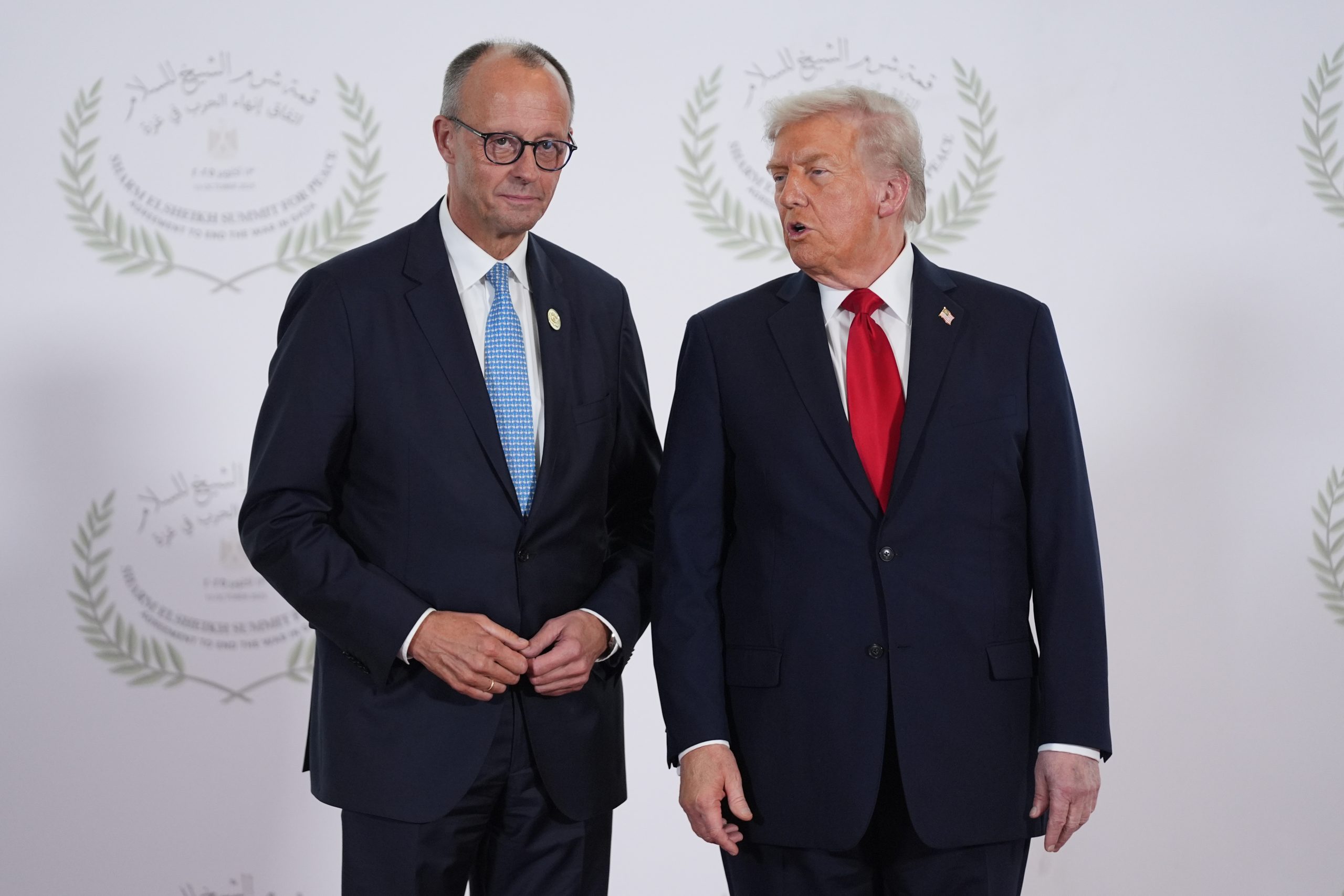
German Chancellor Friedrich Merz has warned of “a deep rift” between Europe and the United States, arguing that the latter “will not be powerful enough to go it alone.”
In his address at the Munich Security Conference Friday, Merz urged Europe and the U.S. to “repair and revive trans-Atlantic trust together” in what he referred to as an “era of great power rivalry.”
[time-brightcove not-tgx=”true”]
Switching to English as he addressed American “friends,” Merz nodded to Trump’s contentious relationship with NATO, insisting that “being a part of [the alliance] is not only Europe’s competitive advantage. It’s also the United States’ competitive advantage.”
While he acknowledged that the existing global order has long been flawed, Merz—when discussing the “under destruction” theme of this year’s conference—argued the “international order based on rights and rules is currently being destroyed.”
He also referenced Vice President J.D. Vance’s speech from last year’s conference. Vance drew ire from European leaders when he argued that what concerned him most was Europe’s “threat from within… the retreat of Europe from some of its most fundamental values—values shared with the United States of America.” He used “free speech” as an example of the values in retreat.
“The culture war of the MAGA movement is not ours,” Merz continued. “Freedom of speech ends here with us when that speech goes against human dignity and the constitution. We do not believe in tariffs and protectionism, but in free trade.”
The German leader appeared to make further strides to distinguish Europe from the Trump Administration, adding: “We stick to climate agreements and the World Health Organization (WHO) because we are convinced that global challenges can only be solved together.”
On Jan. 22, the U.S., under Trump’s direction, officially pulled out of the WHO. The move has garnered much criticism from global health experts.
TIME has reached out to the White House for comment on Merz’s comments.
Read More: Trump and Vance May Have Accidentally United Europe
As Europe takes part in ongoing negotiations regarding the hope for a cease-fire in the Russia-Ukraine conflict, Merz said he has also started private talks with French President Emmanuel Macron about “nuclear deterrence.”
Merz’s concerns echo those made by Canadian Prime Minister Mark Carney in Davos in January. Speaking at the World Economic Forum, Carney argued that the old world order was “not coming back” and encouraged people not to “mourn” the way things used to be. He accused “great powers” of using economic pressure to yield results while urging middle powers to push back.
Carney’s remarks were delivered shortly after Trump threatened to tariff countries who oppose his campaign to annex Greenland—a threat he has since walked back. Trump later lashed out in response to Carney’s speech.
Read More: Carney Hits Back at Trump as Relations Sour: ‘Canada Doesn’t Live Because of the U.S.’
The U.S. President will not be appearing at the Munich Security Conference. Instead, Secretary of State Marco Rubio will represent the U.S. on Saturday and deliver a highly-anticipated speech.
Rubio also warned of a “new era” in geopolitics as he boarded his flight to Germany.
When asked if his message to Europeans will take a softer approach than Vance’s address last year, Rubio told reporters: “The world is changing very fast right in front of us. We live in a new era in geopolitics, and it’s going to require all of us to sort of re-examine what that looks like and what our role is going to be.”
On Friday afternoon, the U.S. Department of State confirmed that Rubio and Merz had met in Munich, after the German Chancellor’s speech.
“They discussed pressing global challenges including securing supply chains, advancing efforts to end the Russia-Ukraine war, and strengthening the partnership between the United States and Europe,” said a spokesperson. “The Secretary expressed appreciation for Germany’s strong support for Ukraine, including over $76 billion in assistance since 2022, and discussed continued coordination on reconstruction efforts.”