

Trade tensions between the United States and China have eased for now, but the technology race is accelerating. While Washington and Beijing have relaxed export controls on semiconductors and rare earths, both have announced new AI models, new applications, and new deals.
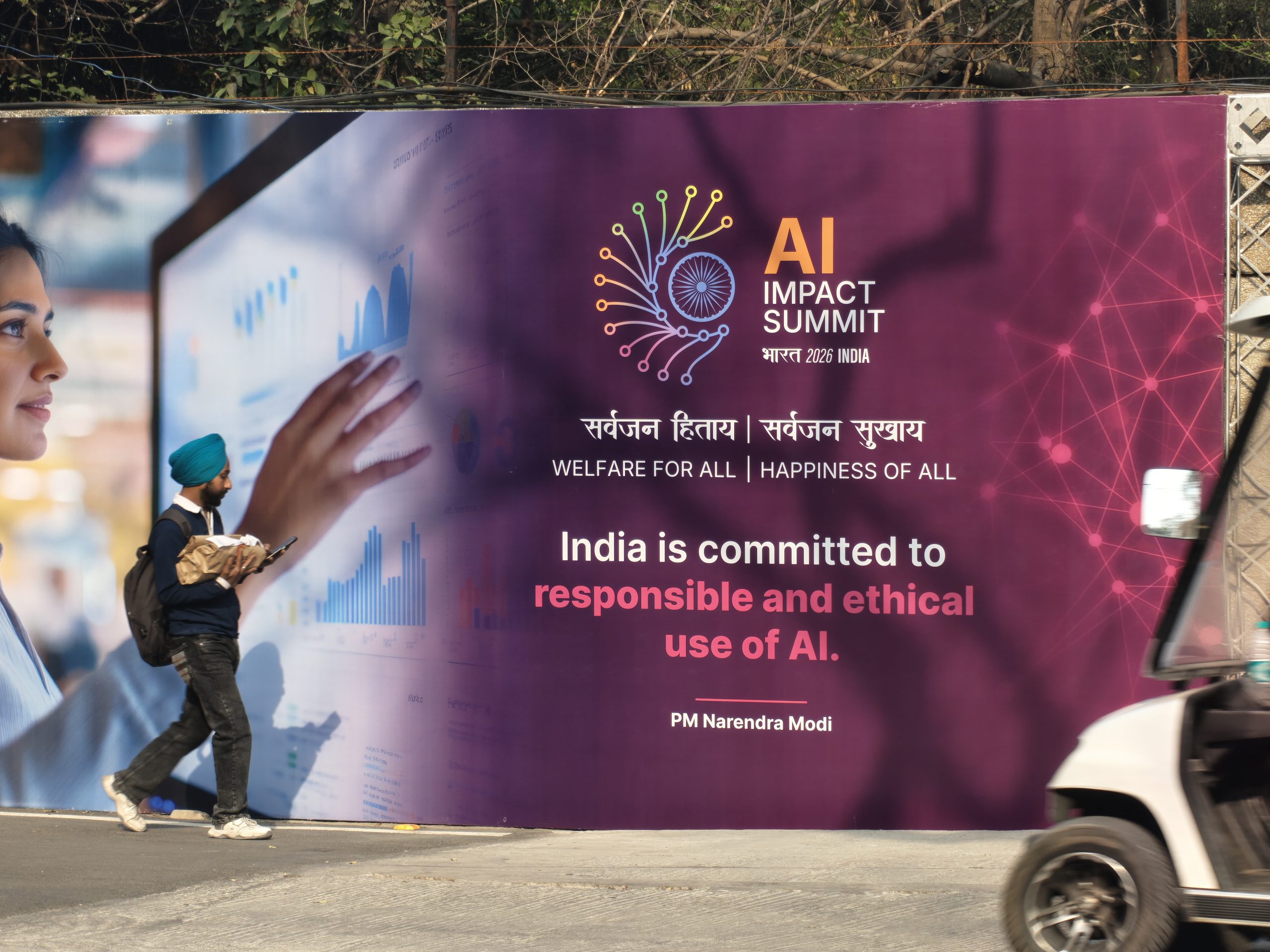
This week, world leaders are meeting in New Delhi for the India AI Impact Summit. And technology competition is, unsurprisingly, high on the list of discussion topics. Ever since last year’s “DeepSeek moment,” policymakers and executives have continued to debate: Will the U.S. or China win the AI race?
[time-brightcove not-tgx=”true”]
But that question may simplify more than it clarifies. What does AI leadership mean? What are we racing toward? What are the tradeoffs? Where are global supply chains too connected to derisk? And where can countries other than the U.S. and China compete? Without understanding the nuance of these questions, leaders risk advancing short-sighted solutions to today’s most pressing technology problems and may be pursuing flawed strategies in the long game of geopolitics.
The many different AI races
The truth is that AI isn’t a single race. There are multiple. Competition itself is creating new arenas of contestation, driving countries and companies to push the boundaries of innovation. And states beyond the U.S.-China binary are reshaping technology, capital investment, and geopolitics.
For instance, there is a race to develop a dominant open-source AI model and a race to develop the top closed-source AI model. America’s frontier AI models are predominantly closed-source, protecting weights and methods. China’s are mostly open-source, diffusing quickly and cheaply, making them attractive to the Global South. While the U.S. does have open models, many of its biggest open-source developers are reportedly pivoting in favor of closed-source models.
The distinction between open and closed is often more commercial than technical. The U.S. leads in AI monetization, and its companies have held their market share. But open-source models may be narrowing the performance gap with closed-source models.
However, the pursuit of top AI models isn’t the only contest that counts. The U.S.’s leading AI labs are driving toward artificial general intelligence, a goal to reach capacities beyond human knowledge and cognition. Meanwhile, China’s centralized political system, focused on control, is prioritizing AI diffusion, from driverless cars and the internet of things, to consumer applications and robots.
These are sometimes competing objectives, but they converge. China’s models grow more capable as they diffuse, and Beijing is simultaneously pursuing AGI. Meanwhile, as American models advance, AI is being embedded into daily life, including in business, education, and healthcare.
Washington and Beijing come to the AI competition with distinct advantages. I would argue that the U.S. leads overall, especially in terms of chips, models, and sales. Plus, the U.S. has an unparalleled network of global partners that scale its reach. Estimates put China’s leading-edge AI chip production at just 3% of U.S. totals, and public data suggests top U.S. AI chips are five times more powerful than China’s—even though China holds the lead in the scale of its production of legacy semiconductors.
But even some of China’s perceived advantages, especially during the prolonged transition from NVIDIA’s Hopper to the advanced Blackwell architecture, may prove to be temporary. As more advanced chips enable larger training runs, making models more capable, the scaling laws are likely to reassert themselves. Those gains in performance are expected to disproportionately flow to Western labs with access to frontier computing infrastructure, potentially leaving China further behind in the next phases of AI.
America’s capital markets are an unparalleled asset financing AI innovation and the AI buildout. While Goldman Sachs Research expects Chinese internet firms to invest 70 billion to support AI next year, a substantial sum, that’s only 15% to 20% of the forecast in the U.S.
The problem with America’s efforts to build out AI isn’t capital. It’s bottlenecks in energy generation, infrastructure, and transmission, especially given rising data center power demands. While the White House’s AI Action Plan prioritizes promoting America’s AI industry and building “vastly more energy generation,” state and local rules can impede federal plans. With holdups at home, investors are exploring buildouts abroad, including in the energy-rich Gulf states.
Beijing, though a net energy importer, faces no such barriers. It’s generating new coal, nuclear, and renewable production, potentially yielding 400 gigawatts of spare capacity by 2030, which is roughly four times America’s total current nuclear energy capacity.
The global landscape
No matter how heated the AI races between the U.S. and China may be, AI is a global industry with global supply chains, and no country can become entirely self-reliant. America is home to Nvidia, the world’s leading semiconductor designer. Its top chips, made by TSMC in Taiwan, require extreme ultraviolet lithography machines from the Netherlands’ ASML, which relies on German and Japanese subcomponents. Etching—the process that reveals chip circuitry—is dominated by America and Japan.
Meanwhile, the Gulf states—especially Saudi Arabia, the UAE, and Qatar—have abundant powered land and are making strategic AI investments. And India, the world’s most populous country and host of this year’s flagship global AI summit, is making meaningful advances, as are previous hosts France, South Korea, and the UK, as well as techno-democracies like Israel and Japan.
Finally, human ingenuity, wherever it is found, fuels AI—and here, the competition is fierce world-wide. The U.S. educates and is the number-one destination for AI talent. But China is home to many world-leading AI researchers, a large number of whom collaborate with their global counterparts, and it works to attract more STEM professionals.
The West and China are filling AI gaps and remaking some of the most complex and global supply chains in history into more resilient assets in the process. America is forming new critical mineral and technology coalitions, most recently Pax Silica, the Department of State’s flagship effort on AI and supply chain security. U.S.-led restrictions of chip exports—which have been tightened and loosened repeatedly in recent months—have to this point constrained Beijing’s AI industry. But China has also overcome multiple chokepoints, and its AI and semiconductor manufacturing capabilities are growing, while it continues to dominate in critical minerals.
AI’s importance to national security is becoming clearer. Military and dual-use AI capabilities, many with commercial origins, are being tested and deployed. Models have been manipulated for AI-orchestrated cyber-attacks, and non-American models have produced code with security vulnerabilities.
AI is unlocking economic growth, boosting bottom lines, and national power—and shifting trade, capital flows, and global politics.
The AI races won’t end in one moment. Leadership will often be partial and temporary. There will be victories. But we’re also witnessing a more technologically divided world, what Stanford University’s Colin Kahl has dubbed “an asymmetric form of AI bipolarity.”
The next AI races
Last year clarified that the great-power AI competition isn’t over. In 2026, AI will yield economic gains and reshape how we work. AI agents that act with minimal human oversight will drive productivity gains across industries. More advanced AI models will yield new innovations. Leaders and the public will confront new energy constraints and solutions. AI is already accelerating a revolution in military affairs, especially in the cyber domain and as Ukraine drives toward greater autonomy on the battlefield. Supply-chain chokepoints will shift, with high-bandwidth and other types of memory, as well as cloud infrastructure, coming to the fore.
And the U.S.-China competitions will continue to fuel, and be fueled by, AI.
More than three years after the release of ChatGPT, even with billions of people using these systems every day, these are still early days, and leaders must make AI plans even if they can’t predict the future perfectly. If the U.S. and other democratic societies want to lead, they must compete together in every race, and for the duration.
The constant in AI is change. Innovation will reshape the rules and arenas of competition, especially as software advances boost compute efficiency. Discoveries are expanding technological possibilities. And history shows that while some of today’s top AI companies will succeed, many will fail. The same could be said for countries—and it is in the democratic world’s best interest, from the most populous nation to the least, that America succeeds.