

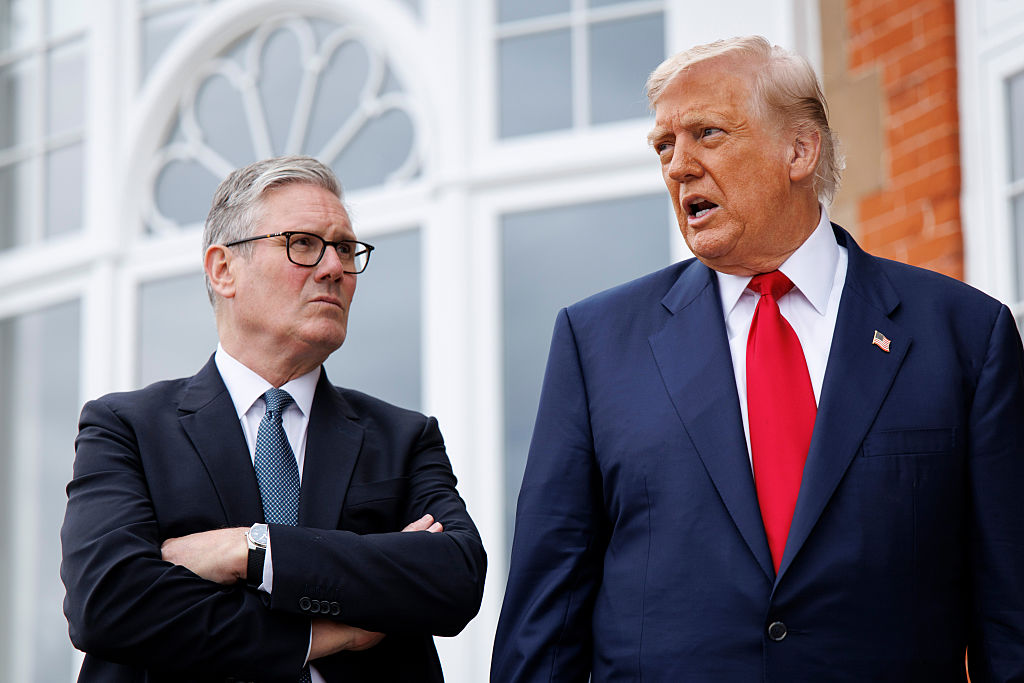
British Prime Minister Keir Starmer is firmly standing by his decision to not join the initial strikes against Iran by the U.S. and Israel—a move that has earned him the wrath of President Donald Trump.
“My focus is providing calm, level headed leadership in the national interest… That means having the strength to stand firm by our values and our principles, no matter the pressure to do otherwise,” said Starmer during a press briefing Thursday. “It was in the national interest—and I stand by it.”
[time-brightcove not-tgx=”true”]
However, Starmer acknowledged the widespread retaliatory Iranian strikes that have occurred since the U.S.-Israeli military action launched early Saturday have drastically changed the state of play.
“When Iran started attacking countries around the Gulf and the wider region, the situation changed,” he argued, saying that Britain is on a mission to protect its “people and allies.”
“Our jets were in the sky last night over Jordan, Qatar, and other partners, refuelling in the air to prolong their mission. We’re constantly resupplying our jets and missile stores and we are responding to requests from allies in the region for further help,” he said.
Starmer previously ordered for the HMS Dragon warship to be deployed to assist in the defense of British bases and partners, particularly the RAF airbase in Akrotiri, Cyprus, which has come under attack.
In his latest address, Starmer announced that Wildcat Helicopters with anti-drone capabilities are set to arrive in Cyprus on Friday.
U.K. Defence Secretary John Healey is currently in Cyprus reviewing all strategies.
Starmer also announced that four additional Typhoon jets will be joining the British squadron in Qatar to strengthen ongoing defensive measures.
The U.K. government, meanwhile, is continuing attempts to bring home “vulnerable Brits” who are currently grounded in the Middle East. The first charter flight from Oman departed Thursday afternoon.
“This conflict could continue for some time,” said Starmer, emphasizing that all efforts are going toward protecting British lives.
However, much like many other European leaders, Starmer urged for de-escalation.
“The longstanding British position is that the best way forward for the region and the world is a negotiated settlement with Iran, where they give up their nuclear ambitions,” he said.
While Starmer initially denied the U.S. access to U.K. bases to launch strikes at Iran, he reversed course on Sunday night, framing it as the “best way to eliminate the urgent threat and prevent the situation spiralling further.”
But Trump has, many times since, lambasted Starmer over the delay, arguing it cost the U.S. critical hours.
“He ruins relationships. We are very surprised. This is not Winston Churchill that we’re dealing with,” Trump said of Starmer during a press briefing in the Oval Office on Tuesday.
Trump’s main gripe is that he was initially prohibited from launching strikes from the Chagos Islands, home to the joint U.K.-U.S. airbase Diego Garcia, which the U.K. now leases after it returned the sovereignty of the islands to Mauritius last year—a move the President previously labeled an “act of great stupidity.”
“It’s taken three or four days for us to work out where we can land. It would have been much more convenient landing there, as opposed to flying many extra hours,” Trump said.
In an interview with a British media outlet, Trump lamented that it’s “very sad to see that the [U.K.-U.S.] relationship is obviously not what it was.”
It’s a narrative Starmer has been quick to dispel from his side.
When asked if his actions might have hindered U.K.-U.S. relations, Starmer told the House of Commons on Wednesday: “American planes operating out of British bases, that is the special relationship in action… hanging on to President Trump’s latest words is not.”